01Unhealthy attachment resembles addiction
When the other person becomes the only source of worth and security, there's intense fear of loss, constant thoughts about them, and difficulty leaving despite harm. After a break-up, symptoms resembling withdrawal appear: sadness, insomnia and a compulsive urge to make contact.
02Steps to recovery
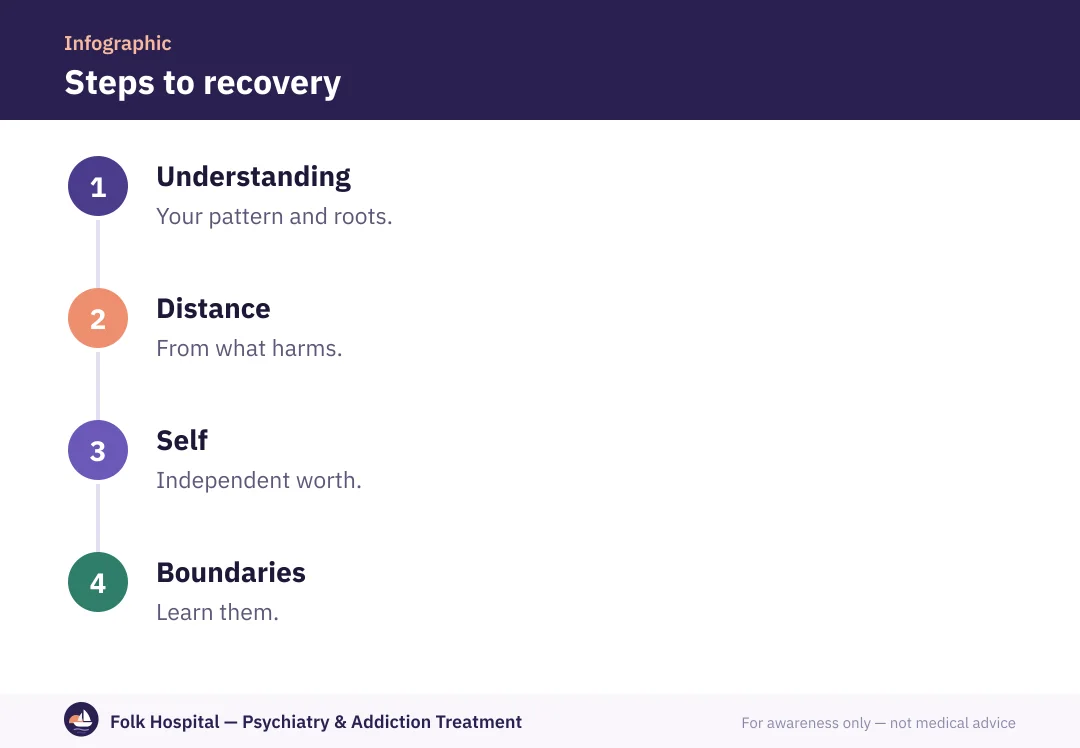
- Understand the patternwhen did it start? Does it repeat in different relationships? What are its roots?
- Cut or reduce contactmute accounts and delete triggering conversations.
- Manage the urgewhen you miss them, delay contact and talk to a friend instead.
- Build self-worthpersonal goals, hobbies and achievements not tied to one person.
- Learn boundarieswhat you accept and don't accept in any relationship.
- A support networkfriends, family and real meetings.
03Psychological therapy
| Therapy | What it works on |
|---|---|
| Cognitive behavioural therapy | Thoughts such as «I'll never find anyone else» and «I'm nothing without them» |
| Attachment-focused therapy | The roots of the attachment pattern in childhood and past relationships |
| Treating accompanying depression | Ongoing sadness and loss of pleasure |
04When is it more than attachment?
If it comes with intense fear of abandonment, sharp emotional swings, impulsivity or self-harm, it may be borderline personality disorder. If sadness lasts weeks with loss of pleasure, it may be depression.
- With thoughts of self-harm after a break-up: the mental health hotline 08008880700, or ambulance 123.
؟Frequently asked questions
How long does it take to get over an attachment?
It varies, but the first weeks after cutting contact are hardest; then the craving fades gradually with support.
Why do I go back to the same person despite the harm?
Intense attachment works much like addiction: painful withdrawal when apart and temporary relief when you return. Understanding this helps break the cycle.
Should I stay friends with the person I was attached to?
Recovery usually needs a period without contact first; friendship can be considered later if it becomes safe.
When do I need a therapist?
With ongoing sadness, difficulty functioning day to day, the same pattern repeating in every relationship, or thoughts of self-harm.
Sources and references
- Addiction: what is it? — NHS (UK)
- Psychotherapies — National Institute of Mental Health (NIMH)
- Depression — National Institute of Mental Health (NIMH)
- Borderline Personality Disorder — National Institute of Mental Health (NIMH)

A specialist in psychological rehabilitation, behaviour modification and relapse prevention, with over 15 years in addiction programmes.
For awareness only — not a substitute for medical advice. Editorial policy · View profile