01Signs
You may notice
- Defending and justifying the abuser.
- Positive feelings towards them.
- Refusing help from others.
- Self-blame.
- Fear of leaving.
02Why does it happen?
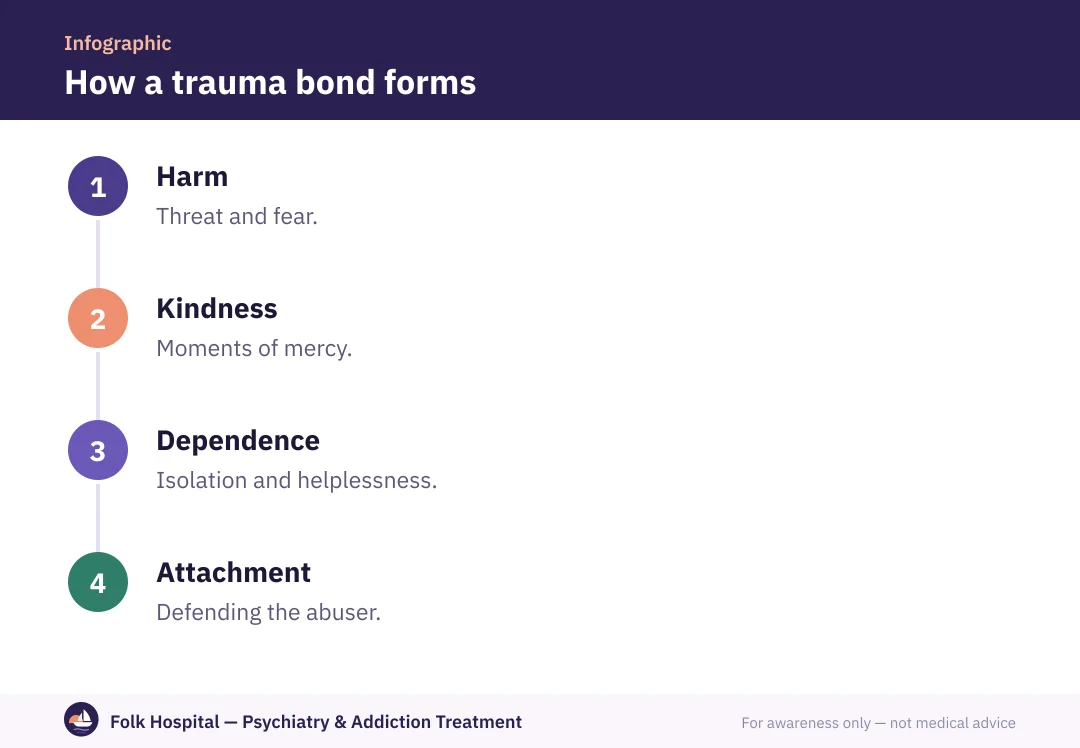
- Threatreal danger to life or safety.
- Dependenceon the abuser for basics.
- Moments of kindnessseem big amid the harm.
- Isolationfrom other sources of support.
Increases the bond
- Blaming the victim.
- Forcing them to cut off immediately.
Helps
- Closeness without judgement.
- A safety plan.
- Specialist psychological support.
- If there is a threat of violence.
In Egypt call the police on 122 or the ambulance on 123.
Ambulance: 123Read also: manipulative personality, psychological trauma, dependent personality.
؟Frequently asked questions
What is Stockholm syndrome?
An emotional bond from victim to abuser as a survival mechanism under threat.
Is it a mental illness?
Not an official diagnosis, but a known trauma-related psychological pattern.
Does it happen in marriage?
A similar pattern called trauma bonding can appear in abusive relationships.
Why does the victim defend the abuser?
Sympathising with the source of danger can feel like a way to survive and reduce harm.
How can I help someone in this situation?
Stay close without blame or pressure, and share information about support and safety.
What does recovery look like?
Safe distance, support and psychotherapy for trauma.
Sources and references
- Stockholm Syndrome — Cleveland Clinic
- PTSD (post-traumatic stress disorder) — overview — NHS (UK)
- Stockholm Syndrome — Cleveland Clinic
- PTSD (post-traumatic stress disorder) — overview — NHS (UK)
A specialist in psychological rehabilitation, behaviour modification and relapse prevention, with over 15 years in addiction programmes.
For awareness only — not a substitute for medical advice. Editorial policy · View profile