01Signs
In a child
- Intense clinging and refusing separation.
- Refusing school or sleeping alone.
- Fear of harm to parents.
- Nightmares about loss.
- Tummy aches or headaches before separation.
Strengthens anxiety
- Allowing long absences.
- Overprotection.
- Sneaking off without goodbye.
Helps
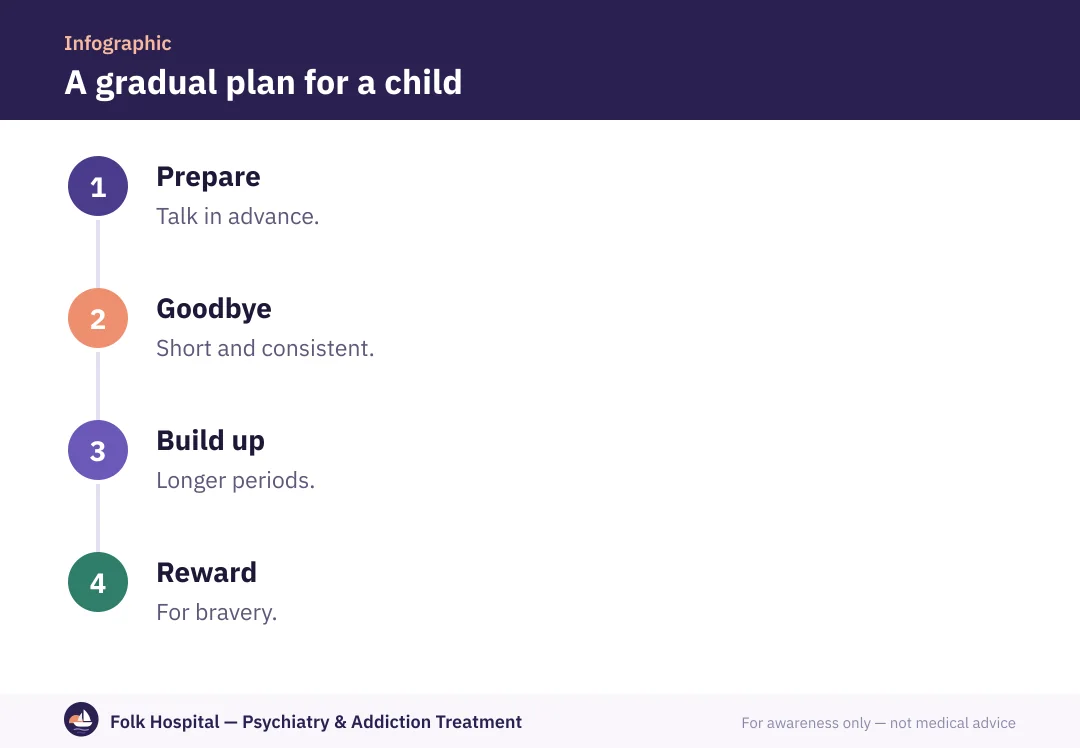
- A short, consistent goodbye.
- Gradual separation steps.
- Praising bravery.
02Treatment plan
- Assessmentruling out other causes.
- Parent trainingcalm responses.
- Gradual exposureincreasing separation periods.
- School coordinationan organised return.
Read also: children's mental health, anxiety disorders.
؟Frequently asked questions
What is separation anxiety?
Excessive fear of being apart from loved ones or harm coming to them.
When is it normal?
In the first years of life, easing gradually.
What are the signs in a child?
Refusing school, clinging, nightmares, tummy aches or headaches before separation.
Does it affect adults?
Yes, as excessive worry about a partner or children and difficulty being apart.
How is it treated?
With CBT, gradual exposure and parent training.
Should I let my child stay home?
Absence strengthens anxiety; a gradual return coordinated with school and therapist is better.
Sources and references
- Separation anxiety in children — MedlinePlus — U.S. National Library of Medicine — MedlinePlus
- Children and young people's mental health — NHS (UK)
- Anxiety Disorders — National Institute of Mental Health (NIMH)

Written byDr. Mahmoud ElsawyConsultant in psychiatry and addiction treatment
A psychiatrist specialising in addiction and mental illness in adults and adolescents, with a focus on dual diagnosis.
For awareness only — not a substitute for medical advice. Editorial policy · View profile