01Introversion or a problem?
| Introversion | Worrying withdrawal | |
|---|---|---|
| Onset | A trait since childhood | A sudden change |
| Feeling | Comfort | Pain or listlessness |
| Relationships | Few and deep | Cut off |
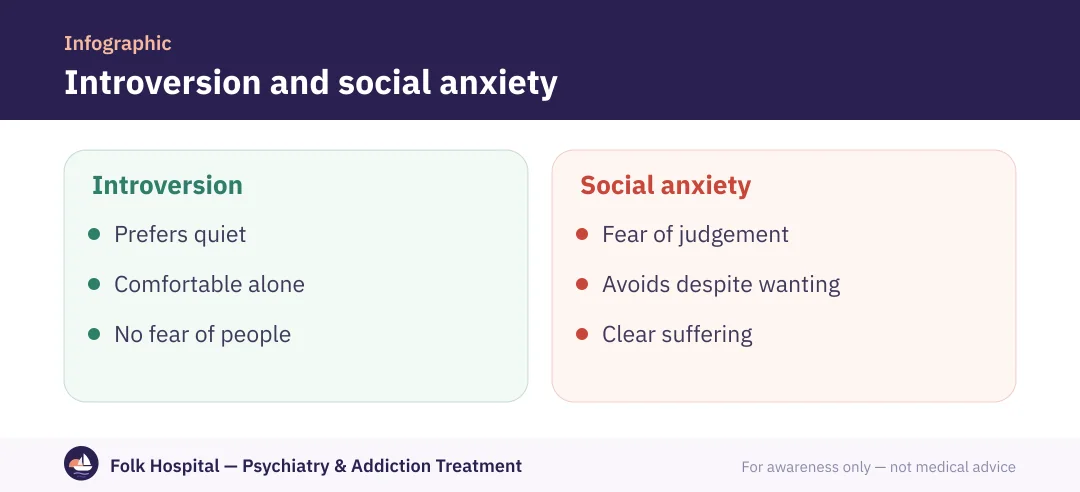
Introvert
- Comfortable alone.
- Chooses few relationships.
Avoidant or depressed
- Suffers from solitude.
- Avoids despite wanting contact.
02Strengths
- Focusin deep work.
- Listeningto others.
- Reflectionbefore deciding.
- Loyaltyin relationships.
Read also: avoidant personality, highly sensitive person, loneliness.
؟Frequently asked questions
Is introversion a mental illness?
No. It's a normal personality trait.
How does it differ from shyness?
Introversion is a preference for quiet; shyness is fear of judgement. They may or may not coexist.
How does it differ from withdrawal?
Introversion is stable and comfortable; sudden withdrawal may signal depression or substance use.
Does an introvert need treatment?
No, unless there's suffering, anxiety or depression.
Can an introvert become sociable?
They can learn social skills while still needing quiet.
What are introverts' strengths?
Focus, listening, deep thinking and strong relationships.
Sources and references
- What Is an Introvert? — Cleveland Clinic
- What Is an Introvert? — Cleveland Clinic

A specialist in psychological rehabilitation, behaviour modification and relapse prevention, with over 15 years in addiction programmes.
For awareness only — not a substitute for medical advice. Editorial policy · View profile