01Symptoms
Behavioural
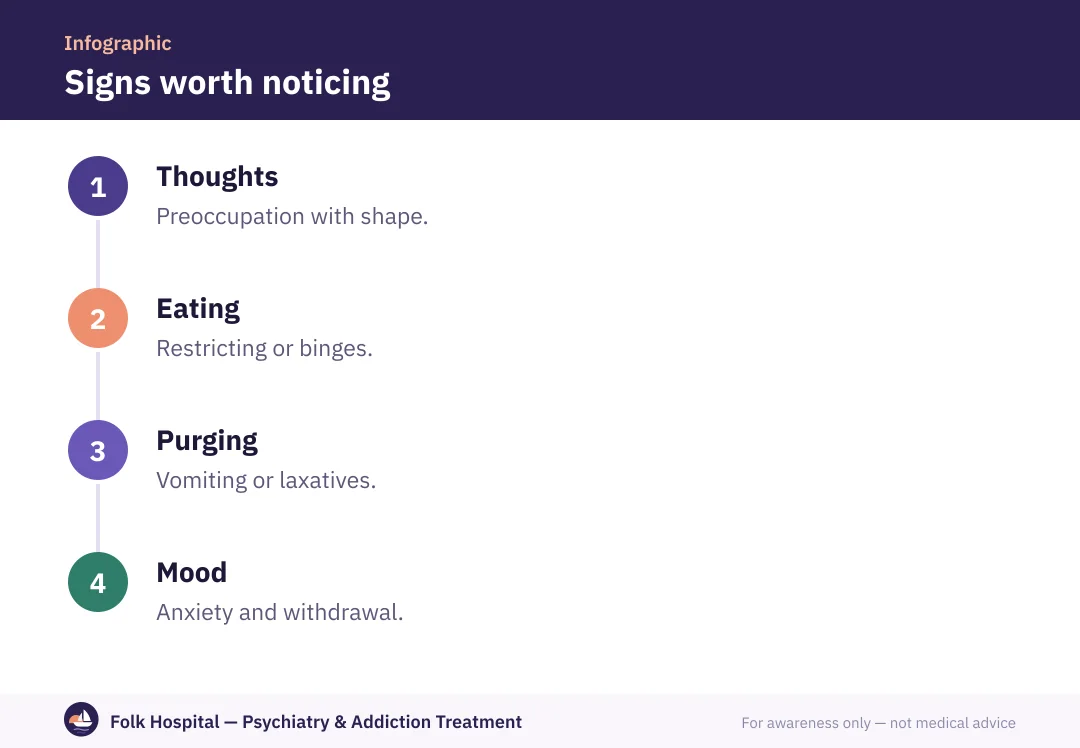
- Skipping meals and avoiding eating in front of others.
- Binge episodes with loss of control.
- Vomiting, laxatives or fasting after eating.
- Compulsive exercise.
- Rigid eating rituals.
Psychological
- Constant preoccupation with weight and shape.
- Anxiety and guilt after eating.
- Mood swings and isolation.
- A distorted view of the body.
02Symptoms by type
| Type | Main sign |
|---|---|
| Anorexia | Severe restriction and fear of weight gain |
| Bulimia | Binges followed by compensation |
| Binge eating disorder | Binges without compensation, with guilt |
| ARFID | Avoiding foods from fear or sensory sensitivity |
Read eating disorders and their treatment, and try the eating disorders test.
؟Frequently asked questions
What are the symptoms of eating disorders?
Restricting, bingeing or compensating, preoccupation with weight and shape, anxiety around eating and physical changes.
Are symptoms easy to notice?
Not always; many people hide their behaviour and appear to be a normal weight.
What are the physical symptoms?
Weight changes, dizziness, tiredness, disrupted periods, and dental and digestive problems.
Is excessive exercise a symptom?
It can be, when it's compulsive and done despite exhaustion or illness to compensate for eating.
How do I talk to someone with symptoms?
Calmly and privately, expressing concern without blame or comments on appearance.
Is there a symptom test?
There's a screening test on the site, but it doesn't replace specialist assessment.
Sources and references
- Eating Disorders — National Institute of Mental Health (NIMH)
- Anorexia — overview — NHS (UK)
- Bulimia — overview — NHS (UK)
- Binge eating disorder — NHS (UK)

A psychiatrist specialising in addiction and mental illness in adults and adolescents, with a focus on dual diagnosis.
For awareness only — not a substitute for medical advice. Editorial policy · View profile