01What is this test based on?
We wrote the questions in plain language to cover the main signs of eating disorders that specialists ask about in an assessment. It helps you see whether you need another step.
02How to read your result
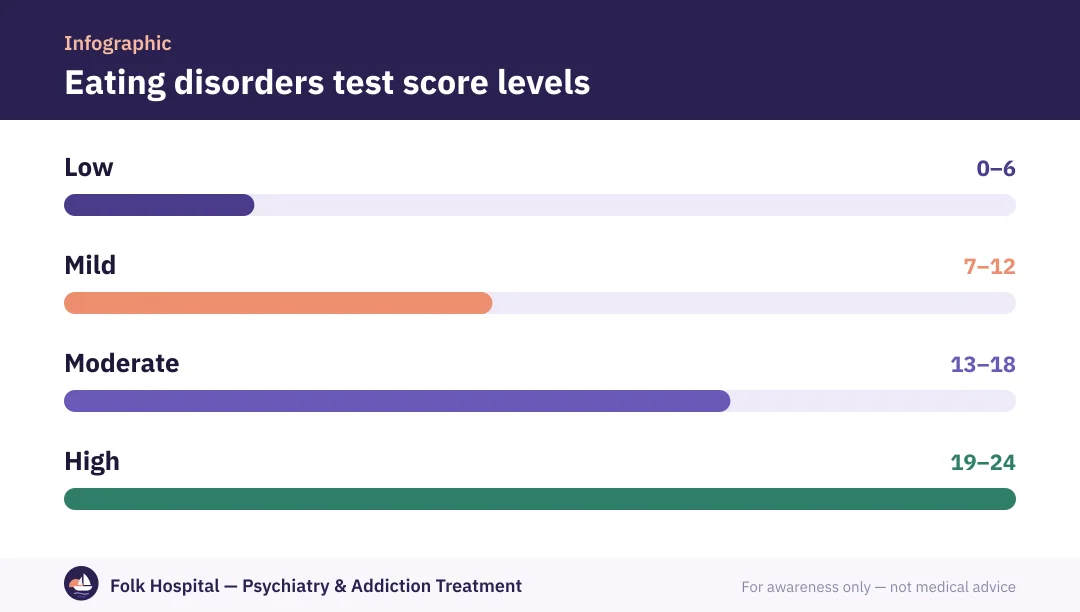
| Score | Level |
|---|---|
| 0–6 | Low |
| 7–12 | Mild |
| 13–18 | Moderate |
| 19–24 | High |
Read about eating disorders. If you're in danger now, contact local emergency services.
03Behaviours worth worrying about
Signs that warrant assessment
- Constant preoccupation with food and body shape
- Avoiding eating in front of others
- Binges with a loss of control
- Vomiting, laxatives or compulsive exercise after eating
- Don't judge yourself by the scalethe problem is your relationship with food.
- Notice feelingsbefore eating or restricting.
- Avoid harsh dietsthey feed the cycle.
- Get an assessmentif there's any compensatory behaviour.
- Suicidal thoughts or intent to harm yourself or others.
- Losing touch with reality or severe agitation.
In Egypt call the ambulance on 123 or the mental-health hotline 08008880700.
Ambulance: 123؟Frequently asked questions
What should I do if my result is high?
Talk to a doctor or mental health specialist soon. Eating disorders are treated effectively, and early help protects your health.
Does the site store my answers?
No, the score is calculated on your device and isn't sent or stored.
Can I have one at a normal weight?
Yes. Eating disorders aren't defined by weight alone.
What are dangerous physical signs?
Dizziness, fainting, palpitations and disrupted periods.
How are eating disorders linked to substance use?
Some use stimulants or laxatives to control weight.
How can I help someone I'm worried about?
Talk calmly about their feelings, not their appearance, and encourage assessment.
Sources and references
- Eating Disorders — National Institute of Mental Health (NIMH)
- Anorexia — overview — NHS (UK)
- Bulimia — overview — NHS (UK)
- Binge eating disorder — NHS (UK)

A psychiatrist specialising in addiction and mental illness in adults and adolescents, with a focus on dual diagnosis.
For awareness only — not a substitute for medical advice. Editorial policy · View profile