01Map of causes
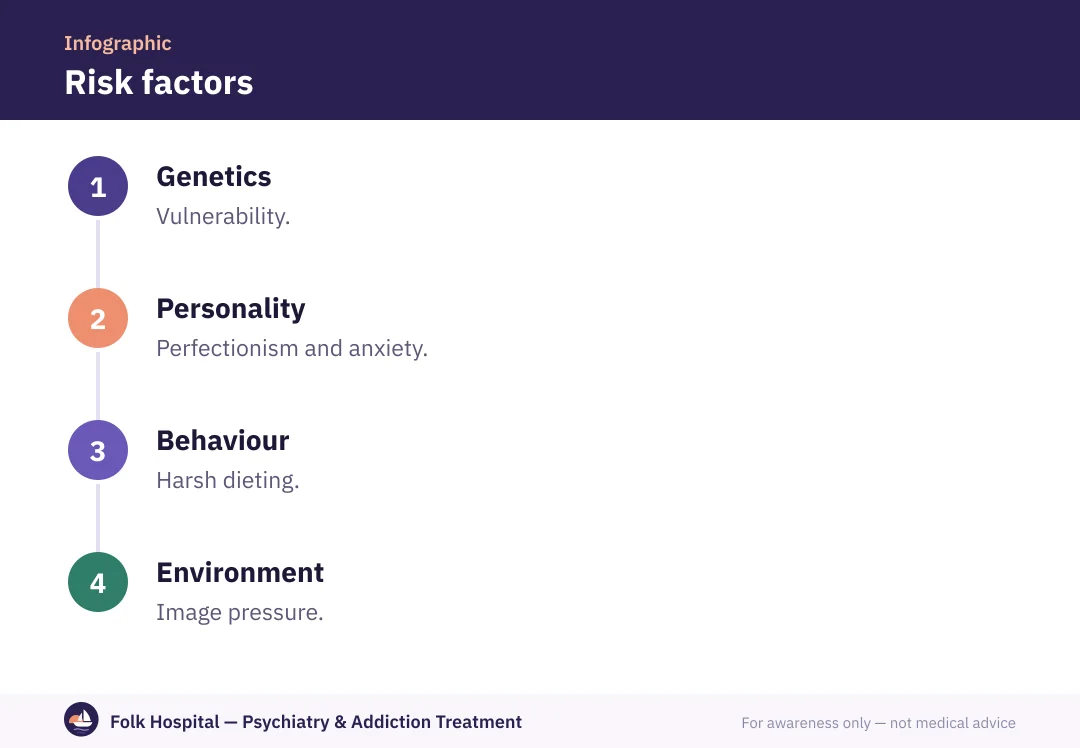
| Type | Examples |
|---|---|
| Genetic and biological | Affected relative, brain chemistry |
| Psychological | Perfectionism, anxiety, low self-esteem |
| Social | Pressure to be thin, comments on appearance |
| Events | Bullying, loss, major stress |
| Behavioural | Strict dieting |
02Risk and protective factors
What raises risk
- Constant comments about weight.
- Strict dieting.
- Severe perfectionism.
- Isolation.
What protects
- Talking about bodies respectfully.
- Calm family meals.
- Valuing the person beyond appearance.
- Seeking help early.
Read eating disorders and their treatment, and try the eating disorders test. Also read low self-esteem.
؟Frequently asked questions
What causes eating disorders?
An interaction of genetic, biological, psychological and social factors, with triggering events.
Are eating disorders hereditary?
Genetics raise vulnerability, especially with an affected relative, but aren't the only cause.
Does social media cause eating disorders?
It can increase body-image pressure in vulnerable people, but isn't the only cause.
Does dieting cause eating disorders?
Strict dieting can be the start of the illness in those who are vulnerable.
Is the family to blame?
No. Blame harms, and the family is an important partner in recovery.
Is trauma a factor?
It can raise risk for some people and needs addressing within the treatment plan.
Sources and references
- Eating Disorders — National Institute of Mental Health (NIMH)
- Anorexia — overview — NHS (UK)
- Bulimia — overview — NHS (UK)
- Binge eating disorder — NHS (UK)

A psychiatrist specialising in addiction and mental illness in adults and adolescents, with a focus on dual diagnosis.
For awareness only — not a substitute for medical advice. Editorial policy · View profile