01Signs
What the family may notice
- Eating less and avoiding shared meals.
- Intense preoccupation with calories, weight and shape.
- Excessive exercise despite exhaustion.
- Baggy clothes to hide the body.
- Cold hands and feet, tiredness and dizziness.
- Missed periods in girls.
02What the illness does to the body
| System | Effect |
|---|---|
| Heart | Slow pulse and low blood pressure |
| Bones | Early thinning |
| Hormones | Disrupted periods and fertility |
| Brain | Poor concentration and mood swings |
| Skin and hair | Dryness and hair loss |
03Treatment
- Medical assessmentheart checks and blood tests to set the level of care.
- Refeedinggradual and supervised by a doctor and dietitian.
- Psychotherapyfor body image and food-related thoughts.
- Family therapyespecially for teenagers.
- Follow-upto prevent relapse.
- Fainting, severe dizziness, palpitations or chest pain.
- Repeated vomiting with severe weakness or confusion.
- Suicidal thoughts or self-harm.
In Egypt call the ambulance on 123 immediately, or the mental-health hotline 08008880700.
Ambulance: 123Read eating disorders and their treatment, and try the eating disorders test.
؟Frequently asked questions
What is anorexia nervosa?
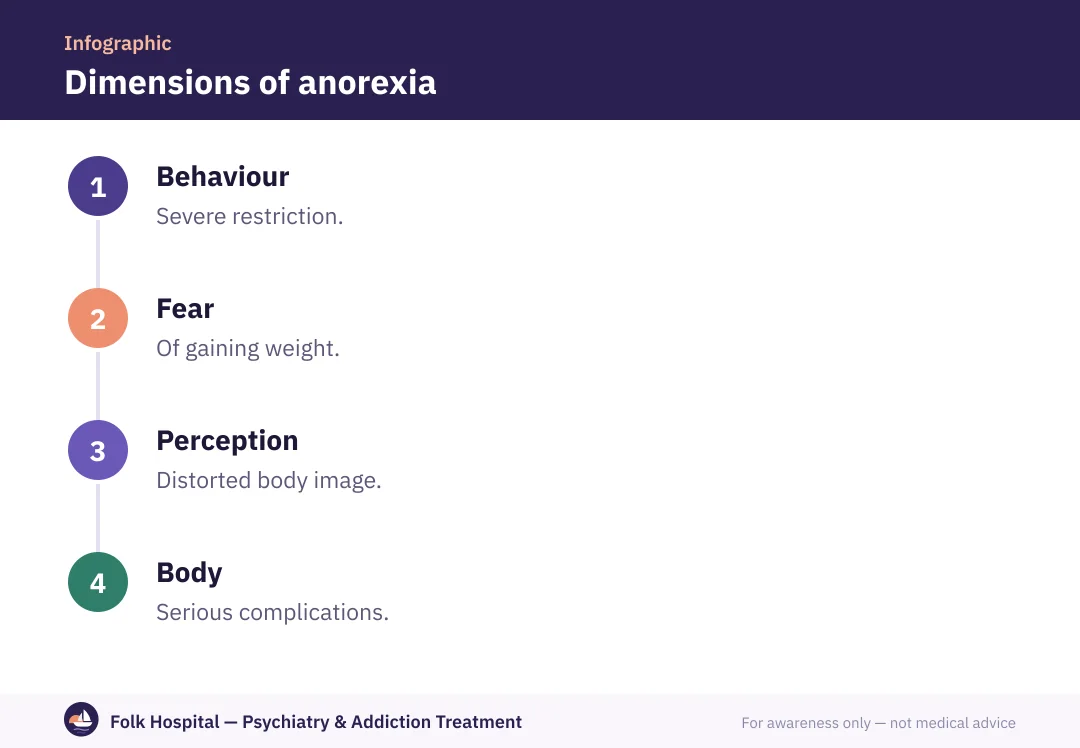
A mental illness with severe food restriction, fear of weight gain and a distorted body image.
Is anorexia a choice?
No. It's a mental illness with genetic, psychological and social factors; the person can't stop through willpower alone.
Why doesn't the patient admit being ill?
The illness distorts body perception and makes restriction feel logical and soothing for anxiety.
What are anorexia's complications?
A slow heart, bone thinning, hormonal and menstrual disruption and poor concentration, which can be serious.
How is anorexia treated?
With medically supervised refeeding, psychotherapy, family therapy and regular physical monitoring.
Does anorexia need hospital admission?
Sometimes, when there are serious physical complications or outpatient treatment hasn't worked.
How can I help my daughter or son?
Stay calm, avoid comments on appearance, focus on health and seek specialist assessment early.
Sources and references
- Eating Disorders — National Institute of Mental Health (NIMH)
- Anorexia — overview — NHS (UK)
- Bulimia — overview — NHS (UK)
- Binge eating disorder — NHS (UK)

A psychiatrist specialising in addiction and mental illness in adults and adolescents, with a focus on dual diagnosis.
For awareness only — not a substitute for medical advice. Editorial policy · View profile