01Symptoms and timing
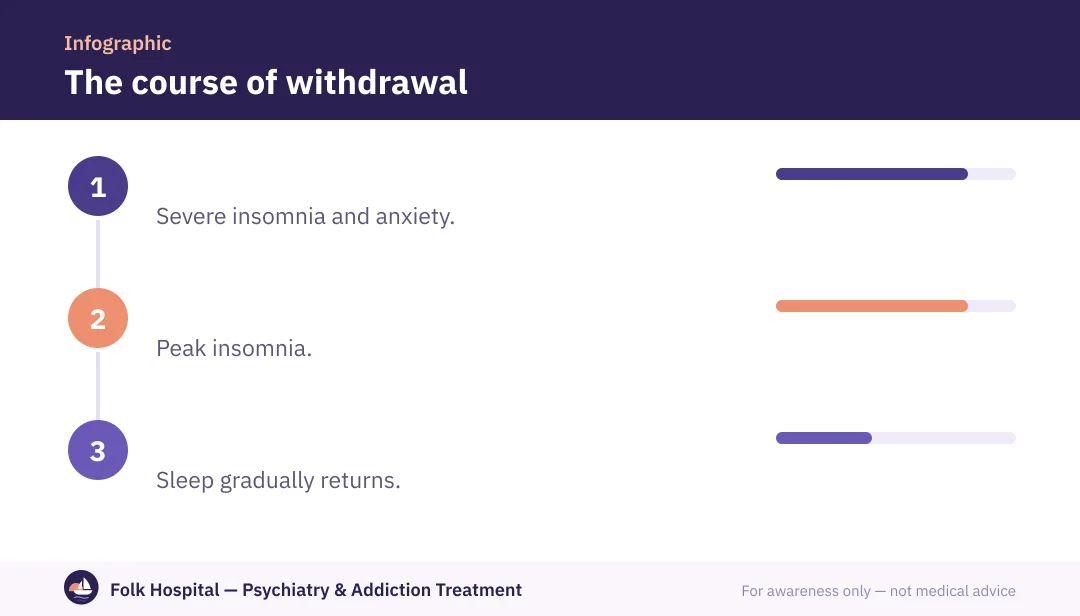
| Time | Symptoms |
|---|---|
| One to two days | Rebound insomnia and anxiety |
| Following days | Peak insomnia, tremor and mood swings |
| One to two weeks | Gradual improvement in sleep |
02A plan for stopping
- Gradual reductiona lower dose or fewer nights, as the doctor plans.
- Fixed timesfor sleeping and waking, even at weekends.
- Bed for sleep onlyno screens or work.
- The 20-minute ruleif you can't sleep, get up for a quiet activity, then return.
- Treating anxiety or depressionif they're behind the insomnia.
- Seizures, severe confusion or dangerous behaviour during sleep: ambulance 123.
Read about the symptoms of zolpidem use, its harms and insomnia treatment.
؟Frequently asked questions
Will I sleep normally after stopping the pill?
Usually yes within weeks, especially with CBT for insomnia and healthy sleep habits.
Why do I sleep worse after stopping?
Because the brain got used to the medicine, temporary rebound insomnia appears. With gradual reduction and healthy sleep habits it improves within days to weeks.
Can zolpidem cause strange behaviour during sleep?
Yes, sometimes, such as walking, eating or driving without awareness, which is a reason to see the doctor immediately.
What's the alternative to sleeping pills?
CBT for insomnia is the first-line recommended treatment, along with treating anxiety or depression if present.
Sources and references
- Prescription Medicines — research topic — National Institute on Drug Abuse (NIDA)
- Treatment Approaches for Drug Addiction — DrugFacts — National Institute on Drug Abuse (NIDA)

A psychiatrist specialising in addiction and mental illness in adults and adolescents, with a focus on dual diagnosis.
For awareness only — not a substitute for medical advice. Editorial policy · View profile