01Signs
| Type | Signs |
|---|---|
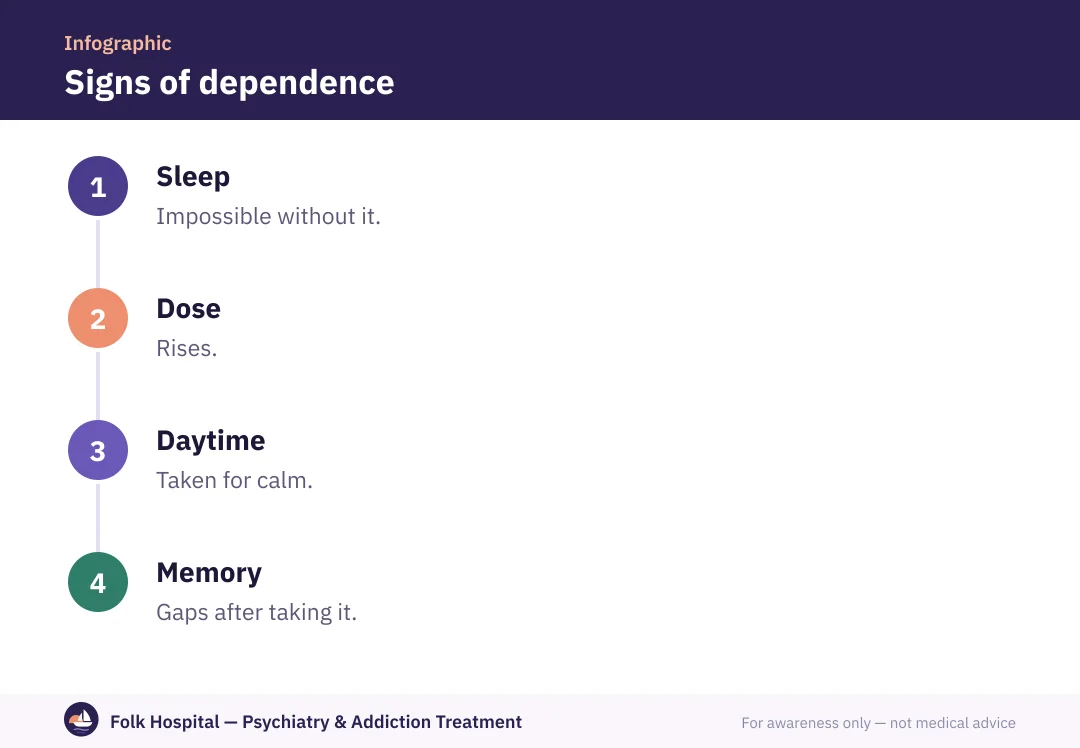
| Signs of dependence | Not sleeping without it, increasing the dose, taking it in the daytime to calm down |
| Under the effect | Drowsiness, unsteadiness and confusion |
| Memory and behaviour | Forgetting events after taking it, behaviour during sleep without awareness |
| In the morning | Drowsiness, slow reactions and poor concentration |
| When it's missing | Severe insomnia, anxiety and tremor |
02Danger signs
- Driving or dangerous behaviour during sleep.
- Slow breathing with alcohol or other sedatives.
- Seizures after stopping.
Ambulance 123.
Ambulance: 12303What should you do?
Don't stop it suddenly, and ask for a reduction plan with treatment for insomnia. Read about zolpidem withdrawal, its treatment and insomnia treatment.
؟Frequently asked questions
I've taken it every night for a year. Am I addicted?
Dependence is likely. Don't stop suddenly; see your doctor for a tapering plan and insomnia treatment.
What sleep behaviours can zolpidem cause?
Walking, eating, making calls or even driving without awareness or memory. Their appearance is a reason to see the doctor immediately.
Can I drive the morning after taking it?
Its effect may linger into the morning in some people, so take care and don't drive if drowsy.
Is zolpidem less addictive than other sedatives?
It can also cause dependence with long-term use, which is why it's usually prescribed for short periods.
Sources and references
- Prescription Medicines — research topic — National Institute on Drug Abuse (NIDA)
- Drugs, Brains, and Behavior: The Science of Addiction — National Institute on Drug Abuse (NIDA)

A psychiatrist specialising in addiction and mental illness in adults and adolescents, with a focus on dual diagnosis.
For awareness only — not a substitute for medical advice. Editorial policy · View profile