01Signs
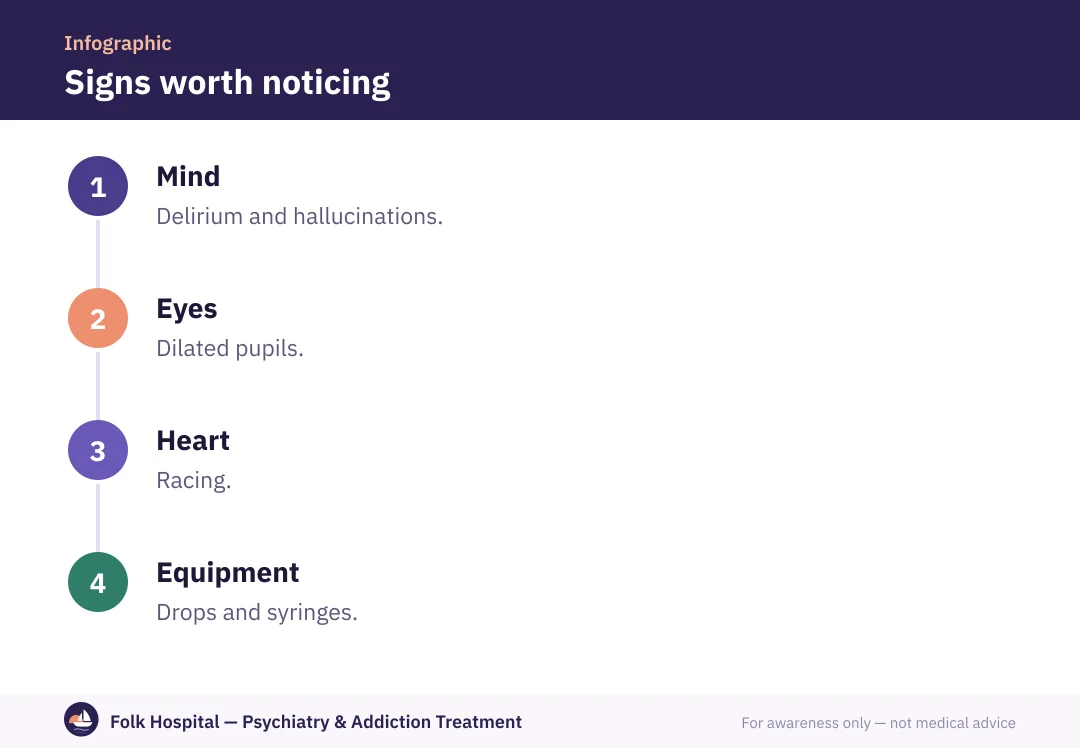
| Type | Signs |
|---|---|
| After injecting | Delirium, hallucinations, incoherent speech and confusion |
| Physical | Wide pupils, dry mouth and skin, warmth and flushing, fast heartbeat and tremor |
| Injection signs | Needle marks, swelling, inflammation and damaged veins |
| At home | Many empty eye-drop bottles and syringes |
02Danger signs
- Severe delirium or dangerous behaviour.
- High temperature or seizures.
- A very fast heartbeat.
- Swelling, pain and heat at an injection site.
03What should you do?
Don't leave them alone during delirium, remove dangerous objects and call an ambulance. Afterwards they need assessment, addiction treatment and tests. Read about tropicamide addiction treatment, its harms and the harms of injecting.
؟Frequently asked questions
I found lots of eye drops with my son. Should I worry?
If he has no medical need for them and there are other signs, it may be misuse. Talk to him and arrange an assessment.
Why do some people inject eye drops?
For a hallucinogenic effect or to boost other substances, but it causes dangerous delirium and damage to the veins.
Does it cause addiction?
Psychological dependence can develop with repetition, often alongside other substances such as opioids.
What's the biggest danger?
Delirium, high temperature and fast heartbeat, along with the risks of injecting and infection.
Sources and references
- Prescription Medicines — research topic — National Institute on Drug Abuse (NIDA)
- Drugs, Brains, and Behavior: The Science of Addiction — National Institute on Drug Abuse (NIDA)

A psychiatrist specialising in addiction and mental illness in adults and adolescents, with a focus on dual diagnosis.
For awareness only — not a substitute for medical advice. Editorial policy · View profile