- Tramadol withdrawal can be longer and more psychologically uncomfortable than some other opioids.
- A share of patients get unusual symptoms such as tingling, numbness, confusion and occasionally hallucinations.
- A gradual, medically supervised taper is the safest approach.
01Why is tramadol withdrawal different from other opioids?
Because the brain has adapted to two things: the opioid effect and the effect on serotonin and noradrenaline. When tramadol stops both are disrupted, producing familiar opioid symptoms alongside psychological and neurological ones that can catch people off guard.
02When does tramadol withdrawal start and how long does it last?
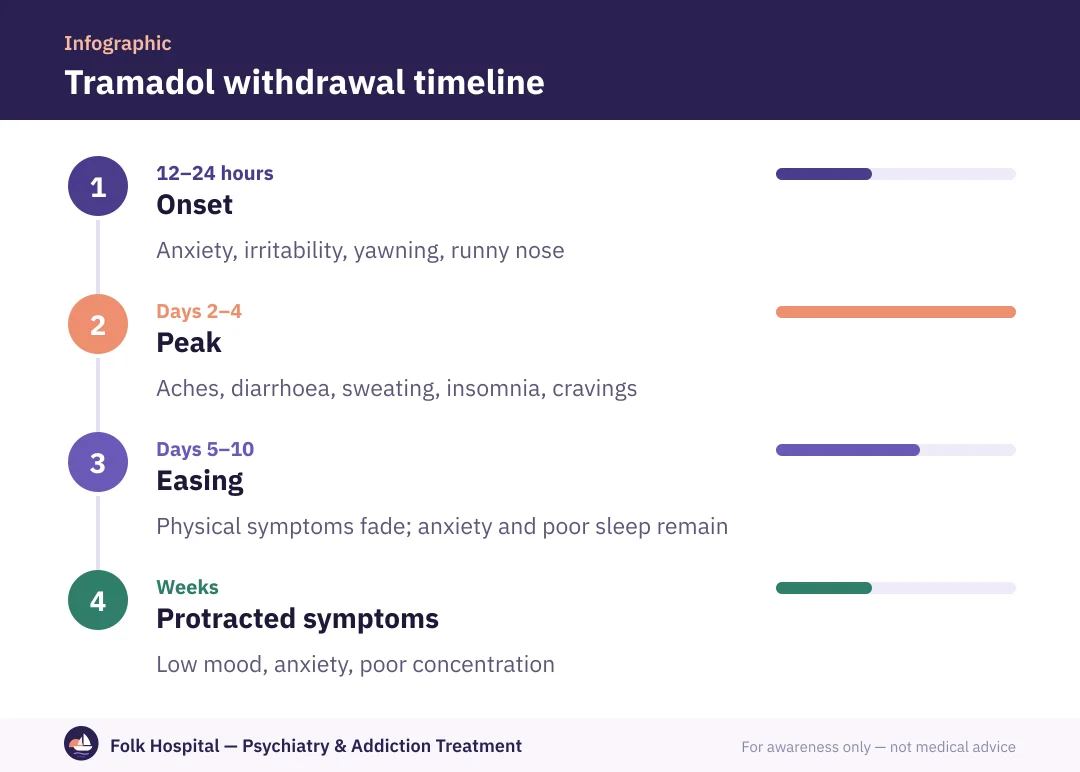
- 12–24 hours
Onset
Anxiety, irritability, yawning, runny nose and watery eyes.
Intensity - Days 2–4
Peak
Muscle and bone aches, diarrhoea, sweating, chills, insomnia, strong cravings.
Intensity - Days 5–10
Easing
Physical symptoms fade; anxiety and disturbed sleep continue.
Intensity - Weeks
Protracted symptoms
Low mood, anxiety, poor concentration, waves of craving.
Intensity
03What are the symptoms of tramadol withdrawal?
Opioid-type symptoms
- Muscle and bone aches
- Diarrhoea, cramps and nausea
- Sweating and chills
- Runny nose and yawning
- Severe insomnia
Unusual symptoms
- Severe anxiety and panic attacks
- Tingling, numbness and "electric" sensations
- Confusion and poor concentration
- Depression and mood swings
- Rarely, hallucinations or paranoia
04When is withdrawal dangerous?
- A seizure or loss of consciousness occurs
- Hallucinations or severe confusion appear
- Suicidal or self-harm thoughts appear
- The person has also been taking sedatives or alcohol
Call an ambulance on 123, or contact us to admit the person straight away.
Ambulance: 12305How is tramadol withdrawal treated?
- Establishing the real dosemany people take high-strength or unknown tablets, so we confirm the actual amount and any history of seizures.
- A taper or substitution planthe doctor decides between gradual reduction and a temporary substitute depending on the case.
- Treating symptomsmedication for aches, diarrhoea, sleep and anxiety, with seizure protection where needed.
- Psychological supportbecause anxiety and low mood are what most often drive people back to tramadol.
- Rehab and follow-uptreating the reasons for use and preventing relapse. See tramadol addiction treatment.
؟Frequently asked questions
Can I stop tramadol suddenly?
It isn't recommended, especially after high doses or long use, because symptoms can be severe and the risk of seizures and relapse rises. A medical tapering plan is safer.
Why do I feel tingling and 'electric shocks' after stopping tramadol?
Because of its effect on serotonin and noradrenaline, some people get symptoms like antidepressant withdrawal: tingling, electric sensations and confusion. These are treatable and fade with time.
How long does depression last after quitting tramadol?
Low mood can persist for weeks to a few months. If it's severe or comes with thoughts of self-harm, it needs an urgent psychiatric assessment.
Sources and references
- Opioids — research topic — National Institute on Drug Abuse (NIDA)
- Opiate and opioid withdrawal — U.S. National Library of Medicine — MedlinePlus
- Prescription Medicines — research topic — National Institute on Drug Abuse (NIDA)

A psychiatrist specialising in addiction and mental illness in adults and adolescents, with a focus on dual diagnosis.
For awareness only — not a substitute for medical advice. Editorial policy · View profile