01What are the acute harms of Strox?
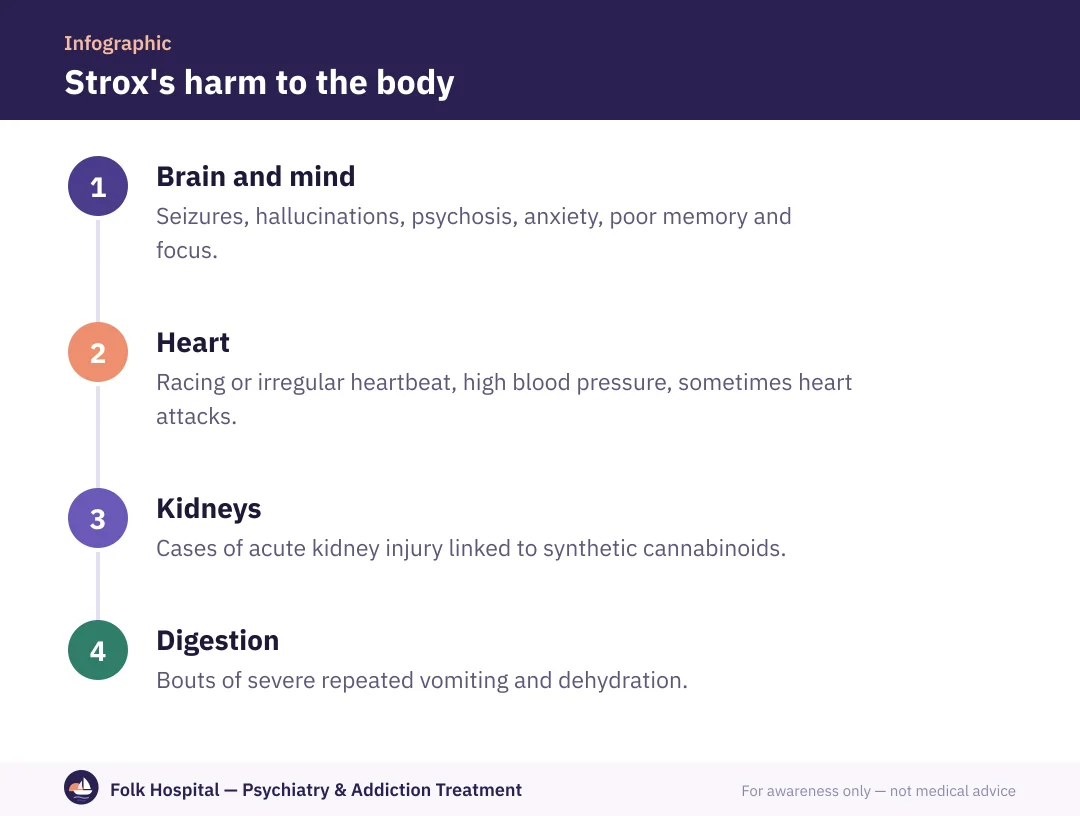
| Harm | How it shows |
|---|---|
| Seizures | Fits even in people who've never had one |
| Heart | Palpitations, chest pain, irregular rhythm |
| Acute psychosis | Hallucinations, paranoia, agitation, risky behaviour |
| Freezing | Locked still without response |
| Kidneys | Flank pain and reduced urine after use |
| Vomiting | Severe bouts that can cause dehydration |
02What are the long-term harms?
Effects of continued use
- Poor memory and concentration and slipping grades.
- Anxiety, panic attacks and depression.
- Repeated psychotic episodes.
- Loss of motivation and interest.
- Isolation and family problems.
03Why are teenagers more vulnerable?
The brain keeps developing until the mid-twenties, and the area responsible for self-control and planning is among the last to mature. Early use interferes with that development and raises the risk of later addiction and mental illness.
؟Frequently asked questions
Can Strox kill?
Deaths linked to synthetic cannabinoids have been recorded from seizures, heart rhythm problems and risky behaviour during intoxication. The risk is real because the drug's strength is unpredictable.
Does Strox damage the brain?
It's linked to poor memory and focus and to psychosis, especially in teenagers and with long-term use. Many effects improve after stopping and treatment, though psychosis may need longer care.
Sources and references
- Synthetic Cannabinoids (K2/Spice) DrugFacts — National Institute on Drug Abuse (NIDA)
- Drugs, Brains, and Behavior: The Science of Addiction — National Institute on Drug Abuse (NIDA)

A psychiatrist specialising in addiction and mental illness in adults and adolescents, with a focus on dual diagnosis.
For awareness only — not a substitute for medical advice. Editorial policy · View profile