01How does meth addiction begin?
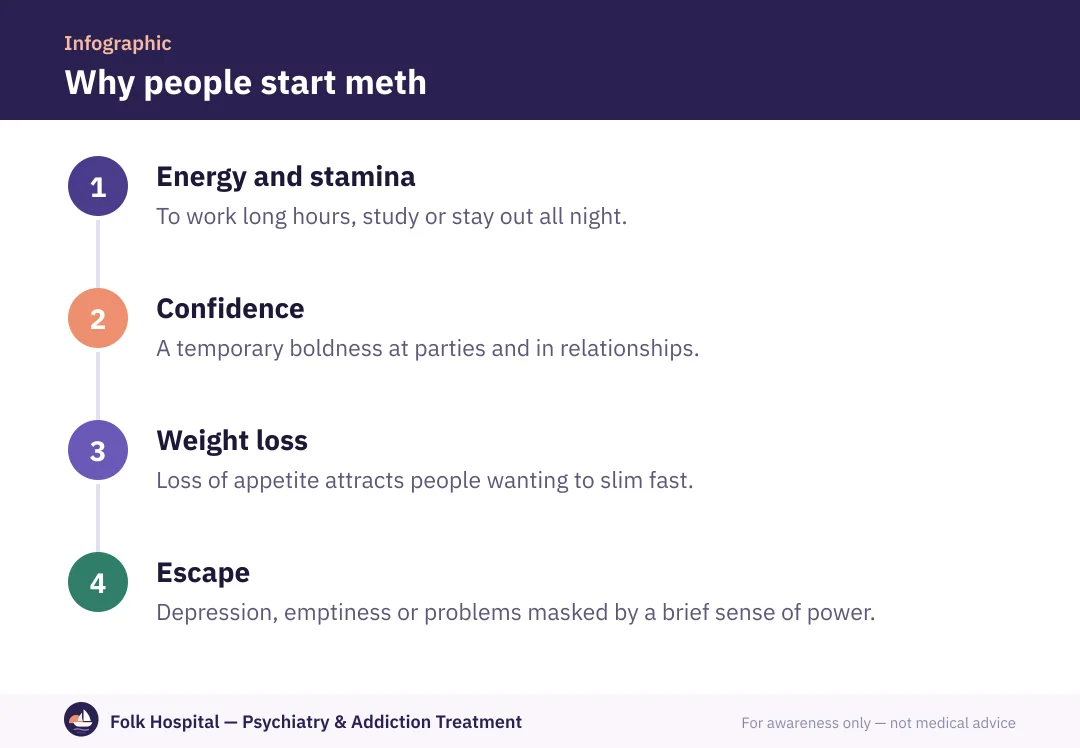
Usually with a try among friends or at a party, or as a fix for a problem: tiredness, work pressure or weight. The first time the person feels at their best, then comes the crash, and another dose looks like the answer.
02Who is most at risk?
Risk factors
- Untreated ADHD.
- Depression, anxiety or trauma.
- Starting other substances at a young age.
- Long shift work or intense study pressure.
- Friends who use and easy access.
- A family history of addiction.
03Why must the cause be treated?
Someone chasing focus may have ADHD that needs safe treatment; someone escaping sadness needs depression treatment. Addressing the original motive is part of dual diagnosis care, and it reduces relapse.
؟Frequently asked questions
Can you get addicted to meth after one try?
Addiction doesn't come from one dose, but the first experience leaves a strong memory and many return to it quickly. Psychological dangers such as psychosis can appear early.
Sources and references
- Methamphetamine — research topic — National Institute on Drug Abuse (NIDA)
- Drugs, Brains, and Behavior: The Science of Addiction — National Institute on Drug Abuse (NIDA)

A psychiatrist specialising in addiction and mental illness in adults and adolescents, with a focus on dual diagnosis.
For awareness only — not a substitute for medical advice. Editorial policy · View profile