01What is Rohypnol?
Rohypnol (flunitrazepam) is a very potent benzodiazepine sedative that was prescribed for severe insomnia but has become restricted or banned in many countries because of misuse. It causes deep sleepiness, relaxation and memory loss for what happens while it's active, and these effects multiply with alcohol.
It shows up in the clinic in two completely different ways:
- Someone who uses it regularly, often with alcohol or to soften a stimulant comedown, and has become dependent.
- Someone who was given it without knowing, in a drink, and needs a different kind of medical and psychological care.
02Treating someone who uses it
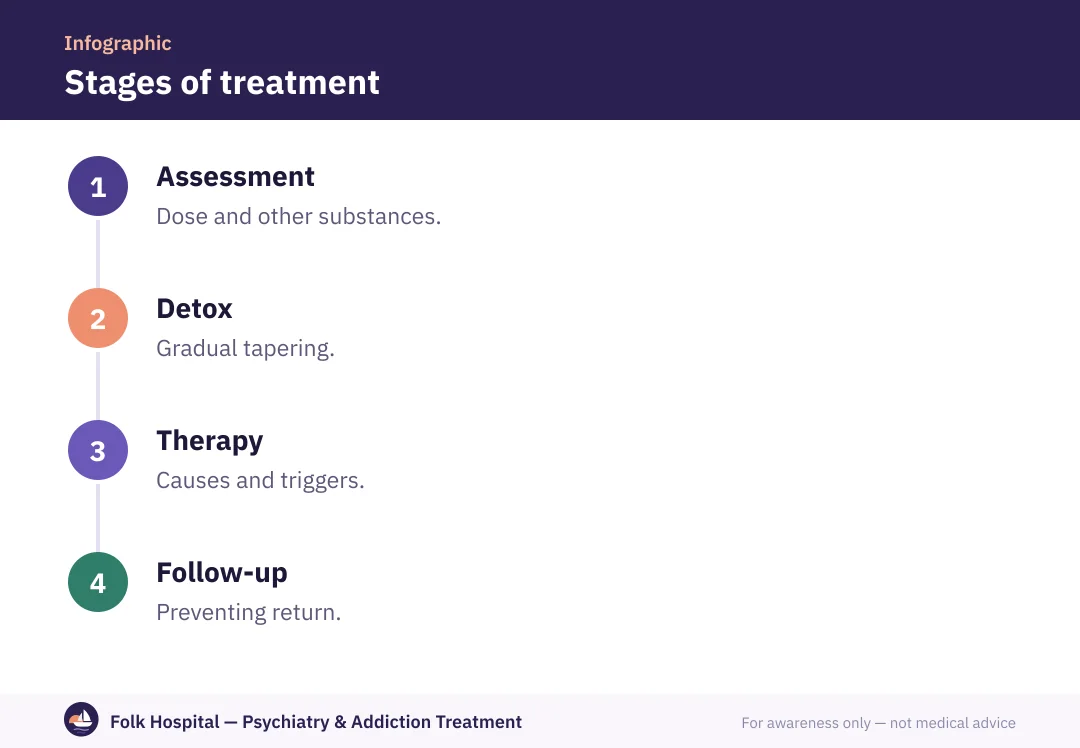
- Assessmentdose and duration, alcohol and other drugs, seizure history and mental state.
- Detoxgradual tapering, often by switching to a longer-acting sedative, with seizure protection.
- Treating other substancesthe alcohol or stimulants it's used with.
- Psychological rehabilitationCBT, handling insomnia and anxiety, and relapse prevention.
- Follow-upsessions for months after stopping.
Read about Rohypnol withdrawal and the general principles in sedative addiction treatment.
- Deep sleep the person won't wake from.
- Slow or weak breathing.
- Seizures or severe confusion.
Mixing Rohypnol with alcohol or opioids can be fatal. Call an ambulance on 123 immediately.
Ambulance: 12303If you were given it without your knowledge
This is a traumatic experience, and the most important thing to know is that what happened isn't your fault. These steps help:
- Safety firstleave the place and ask someone you trust to stay with you.
- Emergency care nowfor a medical check and treatment of any injury, and ask for a drug test as soon as possible, because the drug may leave the body quickly.
- Keep evidenceany remaining drink or clothing if possible, should you decide to take legal action.
- Psychological supportanxiety, insomnia, nightmares, and feelings of guilt or shame are common reactions after trauma, and there are effective treatments.
If symptoms last for weeks, such as frightening flashbacks, avoiding places or being constantly on edge, it may be post-traumatic stress disorder, which is treatable. Read about PTSD.
04Residential or outpatient?
Outpatient care may suit
- Occasional use at low doses.
- Little alcohol and no other drugs.
- No previous seizures.
Residential care is better with
- Daily use or high doses.
- Mixing with alcohol, opioids or stimulants.
- Previous seizures or thoughts of self-harm.
Read about the harms of Rohypnol and how long it stays in the body.
؟Frequently asked questions
How long does Rohypnol addiction treatment take?
Tapering takes from weeks to several more weeks depending on the dose, followed by psychological rehabilitation for a month or more and follow-up for months.
Can I stop Rohypnol suddenly?
It isn't advised after regular use, because withdrawal can cause seizures, severe anxiety and confusion. Tapering is done under medical supervision.
I think something was put in my drink. What should I do?
Go to an emergency department immediately and ask for a test as soon as possible, because the drug can leave the body within hours to a few days. Keep any remaining drink if you can, and seek psychological support.
Why can't I remember what happened?
Rohypnol causes memory loss for what happens while it's active. That isn't your fault and isn't evidence of anything you did. Specialist psychological support can help you cope with this feeling.
Does it show up on a test?
It can be detected for a relatively short time and may need specialist tests not included in every rapid test. Read how long Rohypnol stays in the body.
Sources and references
- Prescription Medicines — research topic — National Institute on Drug Abuse (NIDA)
- Treatment Approaches for Drug Addiction — DrugFacts — National Institute on Drug Abuse (NIDA)
- Post-Traumatic Stress Disorder — National Institute of Mental Health (NIMH)
- Drug misuse in over 16s: psychosocial interventions (CG51) — National Institute for Health and Care Excellence (NICE)

A psychiatrist specialising in addiction and mental illness in adults and adolescents, with a focus on dual diagnosis.
For awareness only — not a substitute for medical advice. Editorial policy · View profile