01Harms
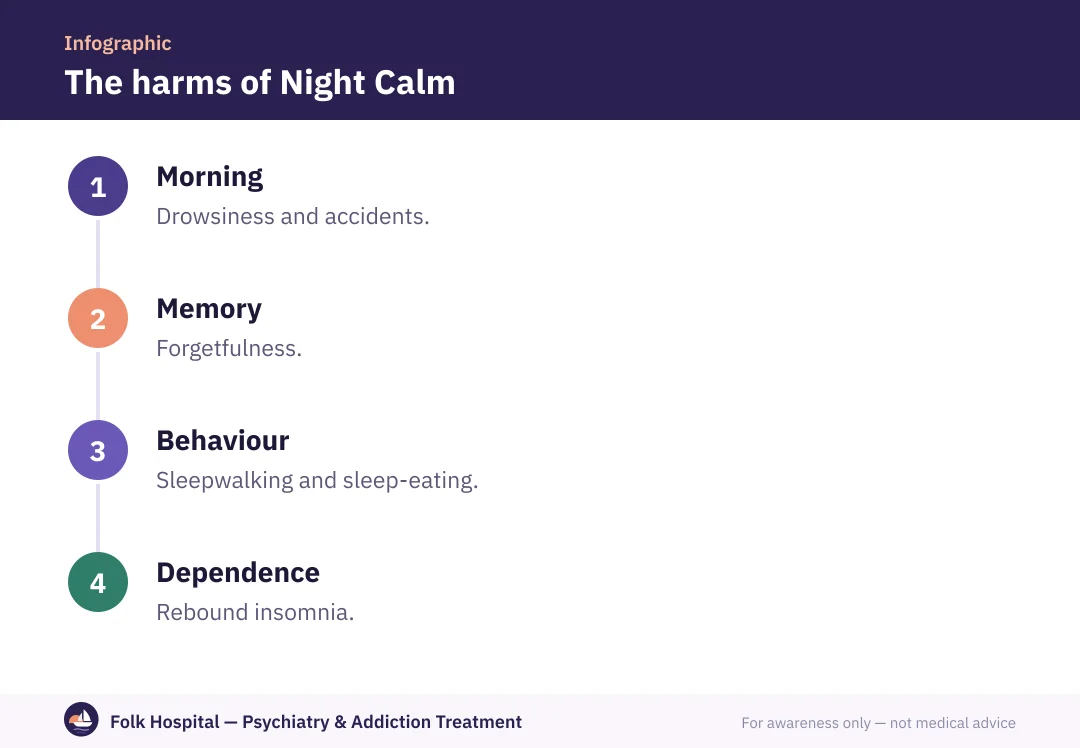
| Area | Harms |
|---|---|
| Sleep | Dependence and rebound insomnia on stopping |
| Memory and behaviour | Forgetfulness and behaviour during sleep without awareness |
| Safety | Morning drowsiness, driving accidents and falls |
| Mind | Mood swings and daytime anxiety |
| Mixing | Deep drowsiness and slowed breathing with alcohol and sedatives |
Get help for
- Dangerous behaviour during sleep, deep drowsiness with other substances, or seizures after stopping. Ambulance 123.
What to do right nowAmbulance: 123
02Treatment
Gradual reduction with CBT for insomnia. Read about Night Calm symptoms, its withdrawal and insomnia treatment.
؟Frequently asked questions
Does Night Calm harm memory?
It can weaken memory during use, especially at high doses, and it usually improves after gradual stopping.
Is Night Calm safe for older people?
It needs caution, as it can increase confusion and falls in older people.
Does it cause depression?
Long-term use may be linked to mood swings, and insomnia itself can be a sign of depression that needs treatment.
Can it be used every night?
It's usually prescribed for a short period; long-term daily use raises the risk of dependence.
Sources and references
- Prescription Medicines — research topic — National Institute on Drug Abuse (NIDA)
- Drugs, Brains, and Behavior: The Science of Addiction — National Institute on Drug Abuse (NIDA)

Written byDr. Mahmoud ElsawyConsultant in psychiatry and addiction treatment
A psychiatrist specialising in addiction and mental illness in adults and adolescents, with a focus on dual diagnosis.
For awareness only — not a substitute for medical advice. Editorial policy · View profile