01Signs
| Type | Signs |
|---|---|
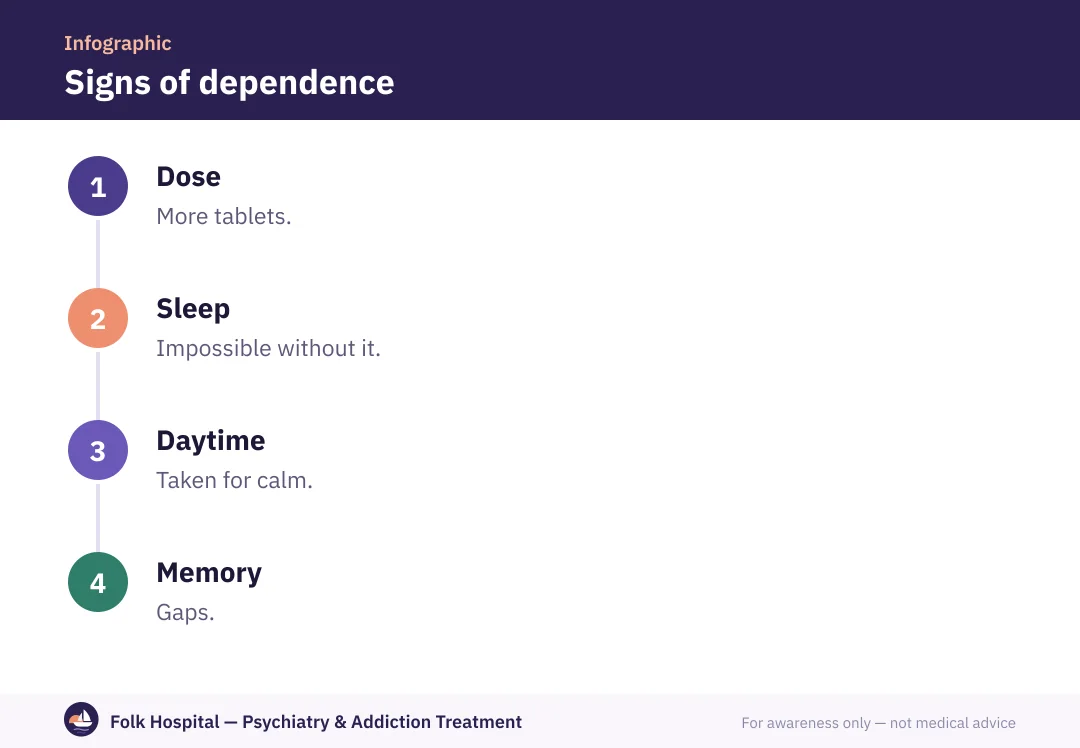
| Signs of dependence | More pills, not sleeping without it, taking it in the daytime to calm down |
| Under the effect | Drowsiness, unsteadiness and slow reactions |
| Side effects | A bitter taste, memory gaps and morning dizziness |
| Behavioural | Getting it from several pharmacies and hiding pills |
| When it's missing | Severe insomnia, anxiety, irritability and tremor |
02Danger signs
- Deep drowsiness or slow breathing with alcohol or other sedatives.
- Dangerous behaviour during sleep, such as driving.
- Seizures after stopping suddenly.
Ambulance 123.
Ambulance: 12303What should you do?
Don't stop it suddenly, and ask for a reduction plan with treatment for insomnia. Read about Night Calm withdrawal, its treatment and insomnia treatment.
؟Frequently asked questions
I'm now taking many tablets a day. Should I stop alone?
We don't advise it. High doses need supervised gradual tapering and may need a short residential stay.
Why is Night Calm used so much?
Because it's given for insomnia, and over time some people get used to it and increase the dose or use it to calm anxiety in the daytime.
Is strange behaviour during sleep a danger sign?
Yes, such as walking, eating or talking without awareness, and it calls for seeing the doctor.
What's the alternative for sleep?
CBT for insomnia, and treating anxiety or depression if present.
Sources and references
- Prescription Medicines — research topic — National Institute on Drug Abuse (NIDA)
- Drugs, Brains, and Behavior: The Science of Addiction — National Institute on Drug Abuse (NIDA)

A psychiatrist specialising in addiction and mental illness in adults and adolescents, with a focus on dual diagnosis.
For awareness only — not a substitute for medical advice. Editorial policy · View profile