01Signs
| Type | Signs |
|---|---|
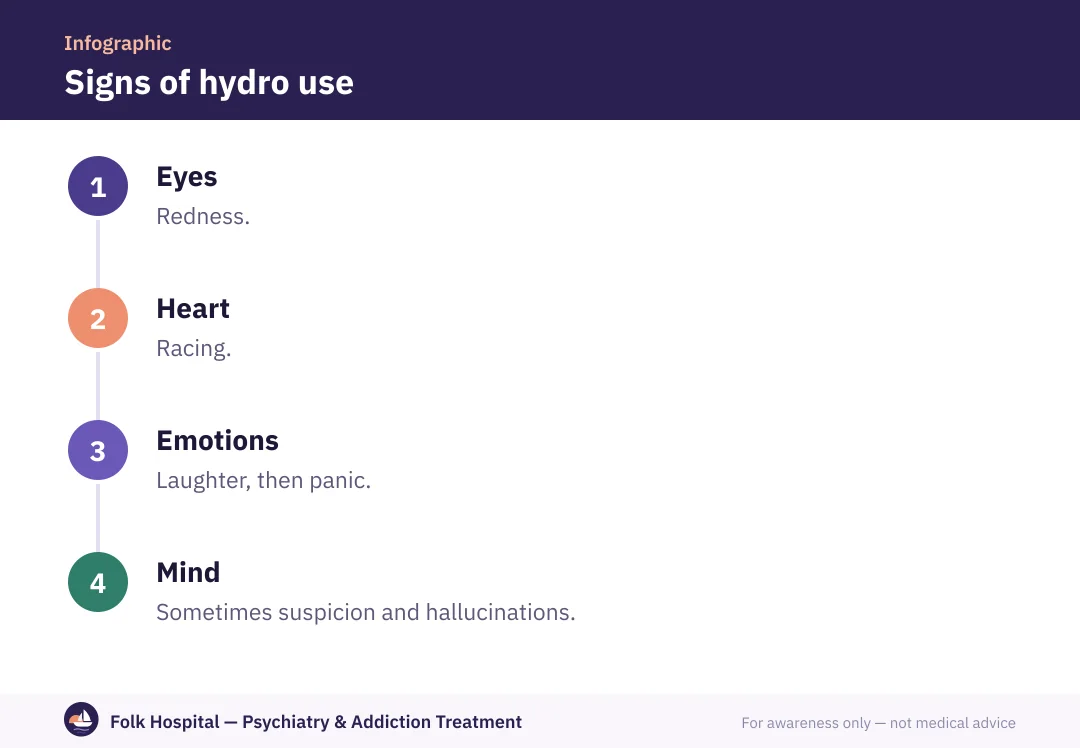
| Under the effect | Red eyes, dry mouth, fast heartbeat, laughter and a distorted sense of time |
| Psychological | Anxiety or panic, suspicion and sometimes hallucinations |
| After use | Hunger, sleepiness and lethargy |
| With repeated use | Daily use, loss of motivation, poor concentration, and irritability and insomnia when it's missing |
02Signs that need urgent assessment
- Severe panic or chest pain.
- Suspicion and hallucinations that persist after the effect wears off.
- Severe repeated vomiting with daily use.
Ambulance 123.
Ambulance: 12303What should you do?
Talk calmly and suggest an assessment, especially if psychological symptoms appear. Read about the harms of hydro, cannabis addiction treatment and drug-induced psychosis.
؟Frequently asked questions
My son had a panic attack after smoking. Is that dangerous?
Panic attacks are common with high-strength cannabis; repeated attacks or suspicion and hallucinations deserve a psychological assessment.
Is hydro stronger than ordinary hashish?
Usually yes, because the growing methods raise the active substance's concentration, so the psychological effects are stronger.
Does hydro cause psychosis?
High-strength types are linked to a higher risk of psychosis, especially with daily use or a genetic predisposition.
How long does it show in a test?
Like hashish, from days to weeks depending on frequency.
Sources and references
- Cannabis (Marijuana) — research topic — National Institute on Drug Abuse (NIDA)
- Drugs, Brains, and Behavior: The Science of Addiction — National Institute on Drug Abuse (NIDA)

A psychiatrist specialising in addiction and mental illness in adults and adolescents, with a focus on dual diagnosis.
For awareness only — not a substitute for medical advice. Editorial policy · View profile