01Signs
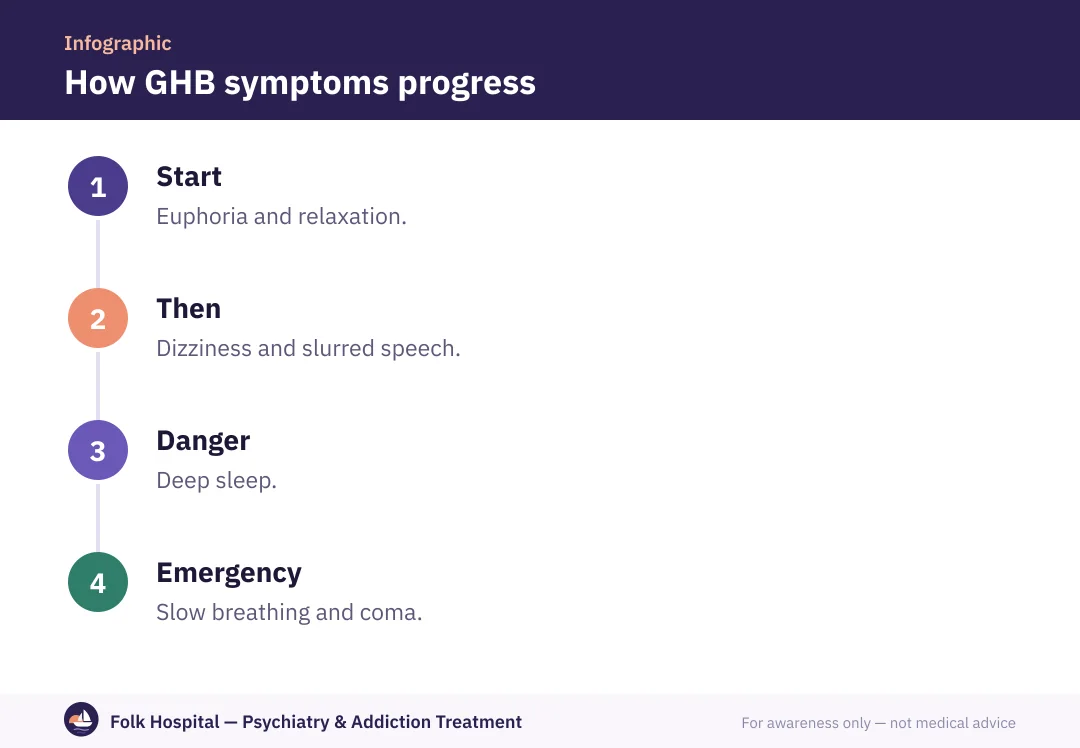
| Stage | Signs |
|---|---|
| Onset | Euphoria, relaxation and increased sociability |
| With higher doses | Dizziness, slurring, loss of balance, nausea and confusion |
| Danger | Sudden deep sleep, slow breathing, vomiting with unconsciousness and seizures |
| With repeated use | Cravings, and anxiety, insomnia and tremor when it's missing |
02Signs of overdose
- Unresponsiveness or difficulty waking them.
- Slow breathing.
- Vomiting with unconsciousness: lay them on their side to prevent choking.
03What should you do?
Don't leave the person alone to "sleep it off", and watch their breathing until the ambulance arrives. Afterwards they need an assessment for substance use. Read about the harms of GHB, overdose and the dangers of mixing.
؟Frequently asked questions
What should I do with someone unconscious after GHB?
Call an ambulance, put them in the recovery position on their side, watch their breathing, and don't leave them alone.
Why is GHB so dangerous?
Because the dose that causes euphoria is close to the dose that causes unconsciousness and slowed breathing, and mixing with alcohol multiplies the danger.
Does GHB cause addiction?
Yes. With repeated use dependence can develop, and its withdrawal can be severe and need hospital care.
What should I do if I suspect it was put in my drink?
Get help immediately from someone you trust, go to the emergency department and ask for early testing.
Sources and references
- Drugs, Brains, and Behavior: The Science of Addiction — National Institute on Drug Abuse (NIDA)
- Prescription Medicines — research topic — National Institute on Drug Abuse (NIDA)

A psychiatrist specialising in addiction and mental illness in adults and adolescents, with a focus on dual diagnosis.
For awareness only — not a substitute for medical advice. Editorial policy · View profile