01Understand the cycle first
Captagon causes a cycle: activity, sleeplessness and irritability, then a crash with sleep and depression. Talking during either phase usually fails. Read about Captagon symptoms.
02The right timing
| Phase | What to do |
|---|---|
| Under the effect | No arguing; focus on safety |
| The crash | Rest and food, without blame |
| After regaining balance | A calm talk about the facts and suggesting an assessment |
03Practical steps
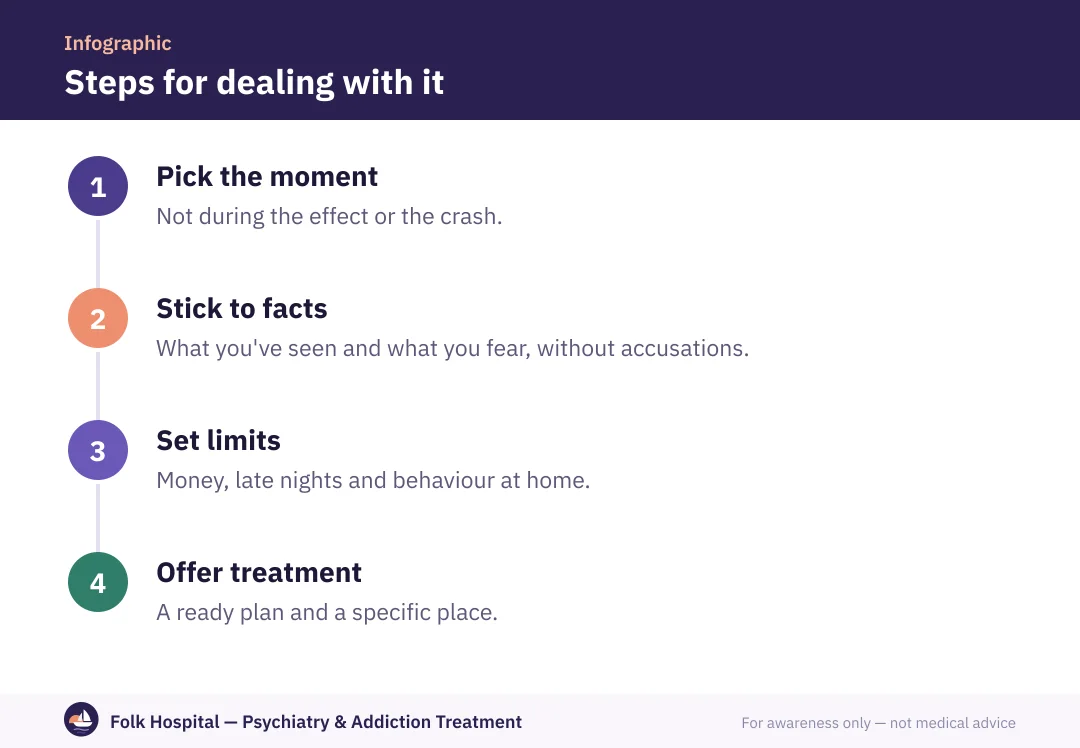
- Write down the factssleepless nights, absences and missing money.
- Talk calmlyabout concern, not accusation.
- Suggest an assessmentincluding mental state.
- Set boundariesno cash, no covering up.
- Watch their mooddepression after stopping can be severe.
- Agitation or severe suspicion with threats, chest pain or suicidal thoughts: ambulance 123 or police 122.
Read about the harms of Captagon and how to convince an addict to get treatment.
؟Frequently asked questions
My son becomes aggressive and paranoid. What should I do?
Don't argue or corner him; speak calmly and step away if you feel unsafe. If hallucinations or threats appear, call an ambulance or the police.
When is the best time to talk to them?
After they've slept, eaten and regained balance, not during overactivity or the first hours of the crash.
What should I do if they become aggressive?
Don't argue, keep a safe distance, remove dangerous objects and get help if there are threats.
Do they need admission?
Admission helps with psychosis, severe aggression, suicidal thoughts or multiple substances.
Sources and references
- Methamphetamine — research topic — National Institute on Drug Abuse (NIDA)
- Treatment Approaches for Drug Addiction — DrugFacts — National Institute on Drug Abuse (NIDA)

A psychiatrist specialising in addiction and mental illness in adults and adolescents, with a focus on dual diagnosis.
For awareness only — not a substitute for medical advice. Editorial policy · View profile