01What is buprenorphine?
A partial opioid used to treat opioid addiction on prescription, which can also be misused outside medical care. Because it's long-acting, its withdrawal is later and longer, but usually milder.
02Symptoms and timing
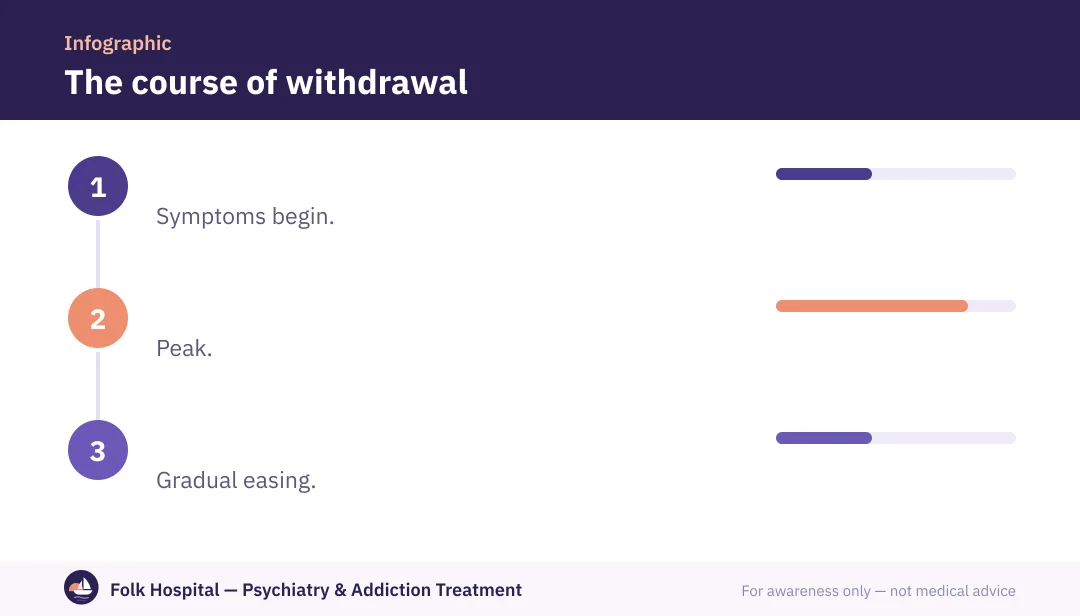
| Stage | Symptoms |
|---|---|
| After 1–3 days | Anxiety, insomnia, runny nose, sweating and yawning |
| First to second week | Muscle aches, diarrhoea, tiredness and cravings |
| Weeks afterwards | Milder insomnia, tiredness and mood swings |
03Safe reduction
- A decision with the doctorafter a long enough period of stability.
- Slow reductionsmall steps you can tolerate.
- Treating symptomsinsomnia, aches and diarrhoea.
- Psychological supportto prevent relapse during and after reduction.
- After stopping, tolerance drops, and going back to strong opioids such as heroin or fentanyl can cause an overdose. For slow breathing or unresponsiveness: ambulance 123.
Read about the harms of buprenorphine, opioid addiction treatment and detox.
؟Frequently asked questions
Is stopping buprenorphine easier than methadone?
Its withdrawal is usually milder, but it depends on the dose and duration.
How long does buprenorphine withdrawal last?
The worst symptoms are usually in the first one to two weeks, and mild symptoms such as insomnia and tiredness may last weeks.
Should I stop buprenorphine if I'm being treated with it?
Buprenorphine treatment reduces relapse and death for many patients. Whether and when to stop is decided with the doctor after a long period of stability.
Is its withdrawal life-threatening?
It's rarely directly physically dangerous, but relapsing afterwards on strong opioids can cause an overdose because tolerance has dropped.
Sources and references
- Medications to Treat Opioid Use Disorder — Research Report — National Institute on Drug Abuse (NIDA)
- Guidelines for the psychosocially assisted pharmacological treatment of opioid dependence — World Health Organization
- Opiate and opioid withdrawal — U.S. National Library of Medicine — MedlinePlus

A psychiatrist specialising in addiction and mental illness in adults and adolescents, with a focus on dual diagnosis.
For awareness only — not a substitute for medical advice. Editorial policy · View profile