01Harms by way of use
| Use | Risks |
|---|---|
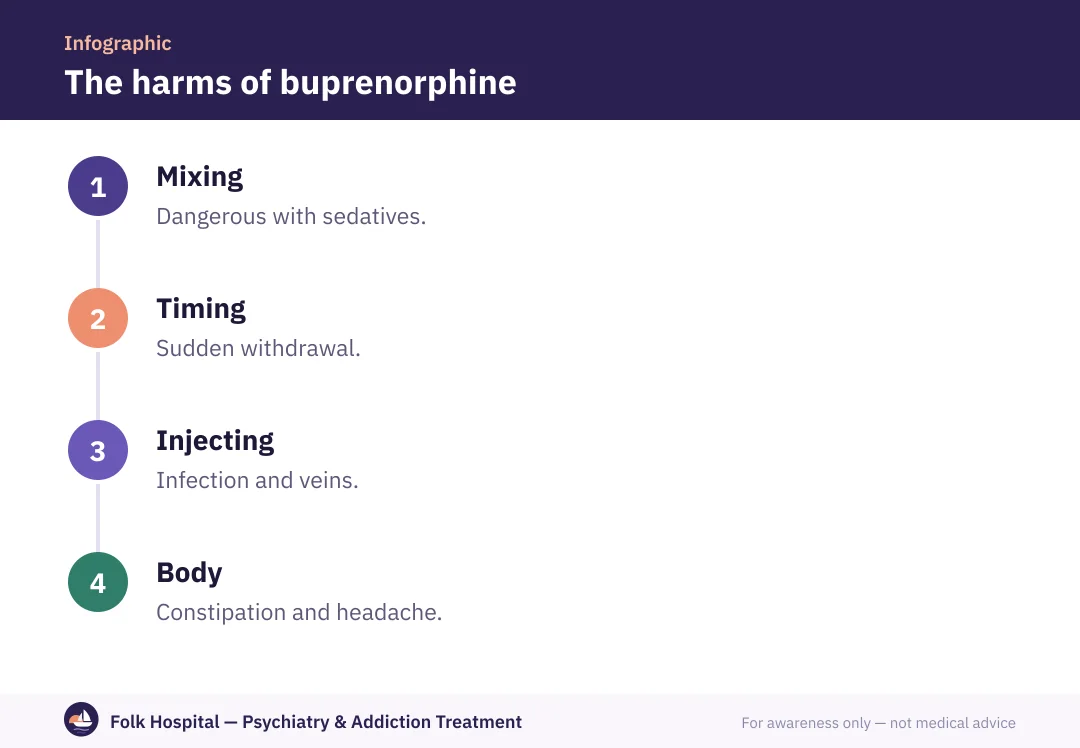
| Under medical supervision | Side effects such as constipation, headache and nausea, followed up with the doctor |
| Without a prescription | Unmeasured doses, dependence and withdrawal |
| Injecting | Inflammation, abscesses, vein damage, and hepatitis and HIV infection |
| Mixing | Slowed breathing and overdose with sedatives or alcohol |
- Slow breathing, unresponsiveness, or swelling and heat at an injection site.
02Safe use
If you need treatment for opioid addiction, buprenorphine is given with a medical plan and follow-up. Read about buprenorphine withdrawal, how long it stays in the body and opioid addiction treatment.
؟Frequently asked questions
Is buprenorphine addictive?
It can cause physical dependence, which is expected in treatment, but misuse outside supervision can be addiction.
Is buprenorphine a treatment or a drug of abuse?
Under medical supervision and in measured doses it's an approved treatment that reduces relapse and deaths. Use without a prescription or by injection carries real risks.
What is precipitated withdrawal?
If buprenorphine is taken before a strong opioid has left the body, it can cause sudden severe withdrawal, which is why the doctor times the start.
Is mixing it with sedatives dangerous?
Yes. It can slow breathing dangerously, especially with benzodiazepines or alcohol.
Sources and references
- Medications to Treat Opioid Use Disorder — Research Report — National Institute on Drug Abuse (NIDA)
- Guidelines for the psychosocially assisted pharmacological treatment of opioid dependence — World Health Organization
- Opioids — research topic — National Institute on Drug Abuse (NIDA)

A psychiatrist specialising in addiction and mental illness in adults and adolescents, with a focus on dual diagnosis.
For awareness only — not a substitute for medical advice. Editorial policy · View profile