01Causes and pictures
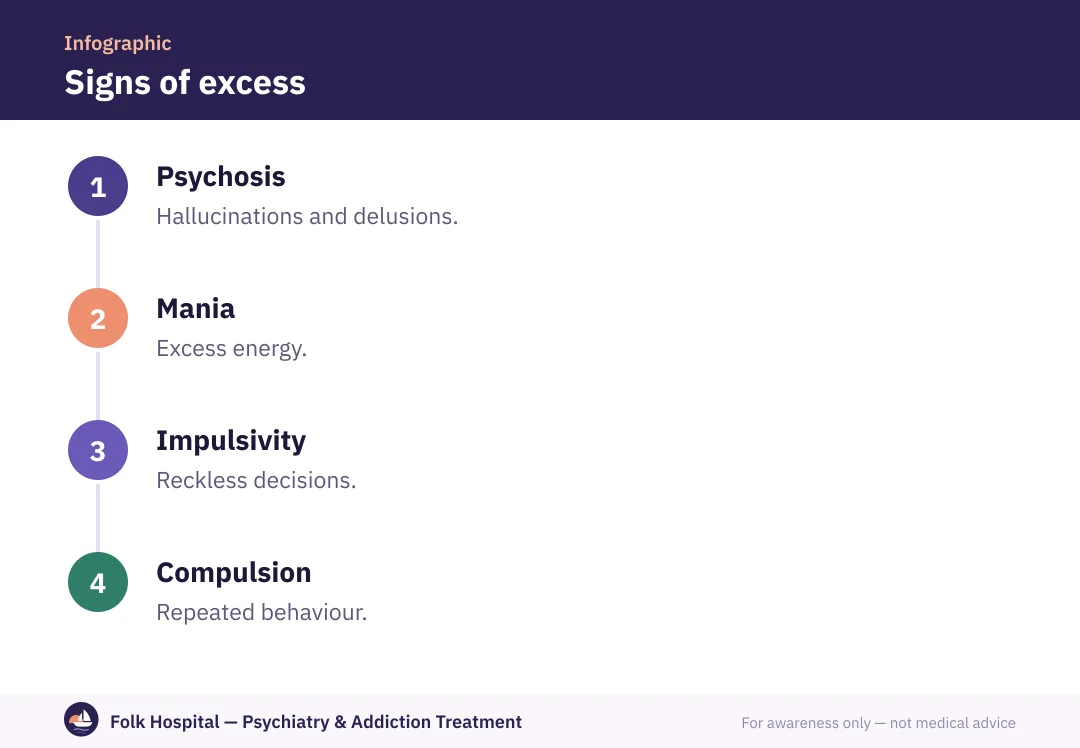
| Cause | Picture |
|---|---|
| Stimulants | High, insomnia, psychosis |
| Mania | Energy, little sleep, impulsivity |
| Psychosis | Hallucinations and delusions |
| Medicines | Urges to gamble or shop |
When to get help immediately
- Suicidal thoughts or intent to harm yourself or others.
- Losing touch with reality or severe agitation.
What to do right now
In Egypt call the ambulance on 123 or the mental-health hotline 08008880700.
Ambulance: 123Read also: drug-induced psychosis, antipsychotics, meth.
؟Frequently asked questions
What are signs of excess dopamine?
It may be linked to mania, impulsivity, insomnia, hallucinations and delusions.
Do stimulants raise dopamine?
Yes, strongly, causing a high, impulsivity and sometimes psychosis.
Is psychosis excess dopamine?
Increased activity in certain pathways is central to explaining psychosis.
Do Parkinson's medicines cause problems?
They can cause urges to gamble or shop in some people.
How is excess treated?
By cause: stopping stimulants, antipsychotics and mood stabilisers.
When is it an emergency?
With acute psychosis, agitation or thoughts of harm.
Sources and references
- Dopamine — Cleveland Clinic
- Drugs, Brains, and Behavior: The Science of Addiction — National Institute on Drug Abuse (NIDA)

Written byDr. Mahmoud ElsawyConsultant in psychiatry and addiction treatment
A psychiatrist specialising in addiction and mental illness in adults and adolescents, with a focus on dual diagnosis.
For awareness only — not a substitute for medical advice. Editorial policy · View profile