01Causes
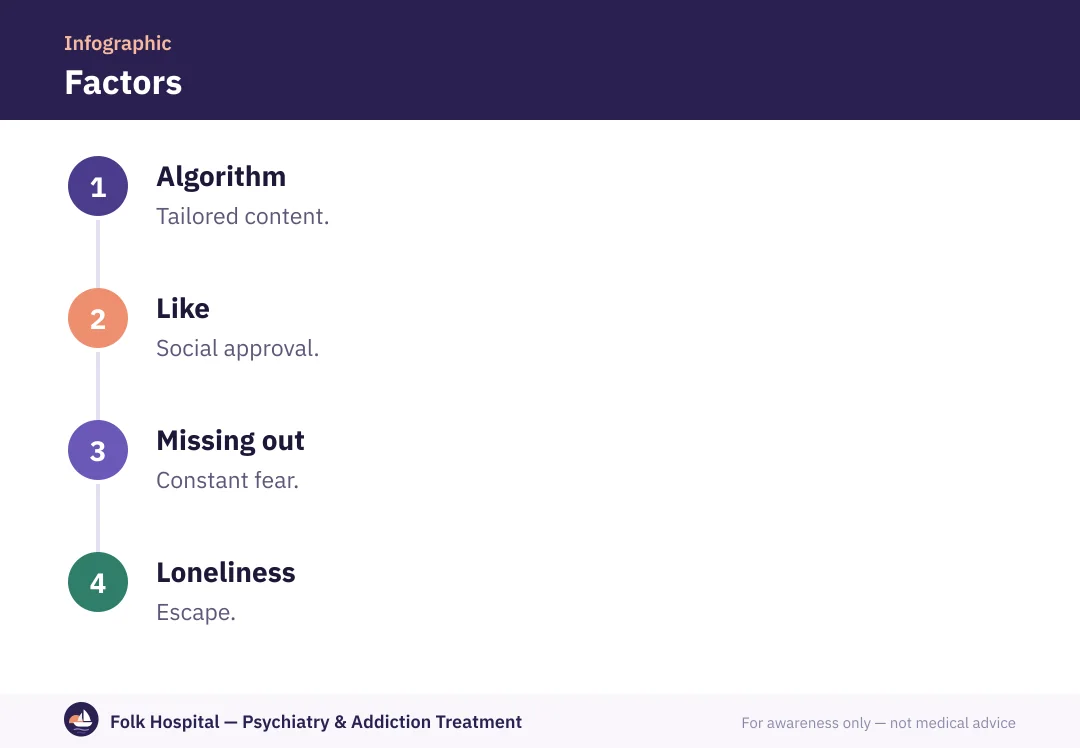
| Cause | Explanation |
|---|---|
| Algorithms | Content designed to keep you |
| Likes | Social reward |
| Adolescence | Sensitivity to evaluation |
| Loneliness | Substitute for connection |
Feeds addiction
- Measuring worth by likes
- Isolation
Protects
- Real relationships
- Hobbies and achievements
Read also: social media addiction, loneliness, young people's mental health.
؟Frequently asked questions
Why do we get addicted to social media?
It meets needs for approval and belonging with fast rewards and design that keeps us longer.
What do algorithms do?
They choose the most engaging content to increase your time.
Why are teenagers more vulnerable?
The adolescent brain is more sensitive to reward and social evaluation.
Is loneliness a cause?
Yes. Platforms can become an unsatisfying substitute for relationships.
Is low self-esteem a cause?
It makes likes a main source of self-worth.
How do I address the cause?
Meet needs offline and adjust your digital environment.
Sources and references
- Social Media and Youth Mental Health — U.S. Surgeon General's Advisory — U.S. Surgeon General
- Addictive behaviours: gaming disorder — World Health Organization

Written byDr. Mohamed HosneyConsultant in mental health and behavioural rehabilitation
A specialist in psychological rehabilitation, behaviour modification and relapse prevention, with over 15 years in addiction programmes.
For awareness only — not a substitute for medical advice. Editorial policy · View profile