01What is this test based on?
We wrote the questions in plain language to cover the main signs of obsessive-compulsive disorder that specialists ask about in an assessment. It helps you see whether you need another step.
02How to read your result
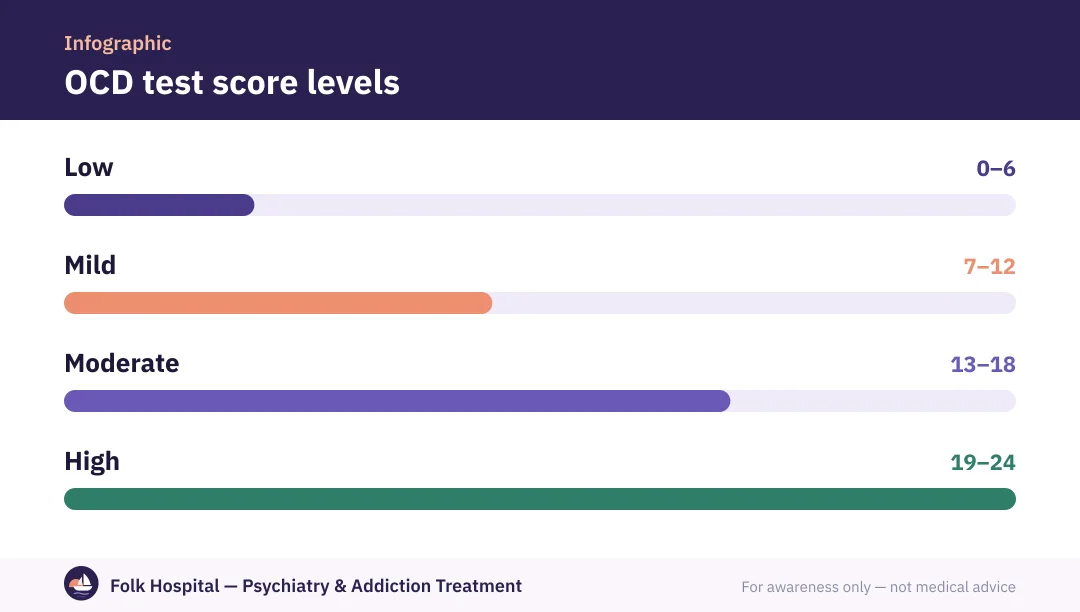
| Score | Level |
|---|---|
| 0–6 | Low |
| 7–12 | Mild |
| 13–18 | Moderate |
| 19–24 | High |
Read about OCD.
03OCD or ordinary carefulness?
| Ordinary carefulness | Possible OCD | |
|---|---|---|
| Time | Minutes | Over an hour a day |
| Feeling | Satisfaction | Anxiety that quickly returns |
| Control | Can stop | Great difficulty stopping |
| Impact | Not disruptive | Disrupts work and relationships |
- Don't seek repeated reassuranceit feeds OCD.
- Log ritualsand their daily time.
- Don't avoid every fearavoidance strengthens it.
- Find a therapisttrained in exposure and response prevention.
؟Frequently asked questions
Can OCD be cured?
It improves greatly with CBT using exposure and response prevention, and with medication when needed.
Does the site store my answers?
No, the score is calculated on your device and isn't sent or stored.
How does carefulness differ from OCD?
OCD causes distress, takes time and disrupts life.
Do disturbing thoughts mean I'm dangerous?
No. Obsessions go against the person's wishes and cause distress.
What is exposure and response prevention?
A therapy facing fears gradually without performing rituals.
Is it treated with medication?
Some antidepressants help alongside therapy.
Sources and references
- Obsessive-Compulsive Disorder — National Institute of Mental Health (NIMH)
- Obsessive compulsive disorder (OCD) — overview — NHS (UK)

A psychiatrist specialising in addiction and mental illness in adults and adolescents, with a focus on dual diagnosis.
For awareness only — not a substitute for medical advice. Editorial policy · View profile