01What is this test based on?
We wrote the questions in plain language to cover the main signs of narcissistic traits that specialists ask about in an assessment. It helps you see whether you need another step.
02How to read your result
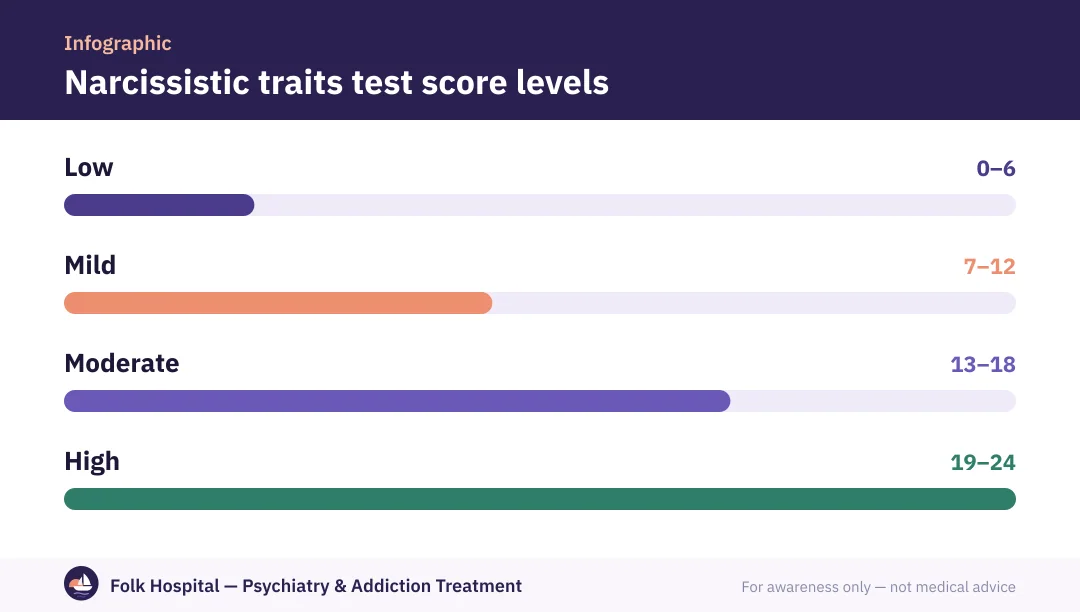
| Score | Level |
|---|---|
| 0–6 | Low |
| 7–12 | Mild |
| 13–18 | Moderate |
| 19–24 | High |
Read about narcissistic personality.
03A trait or a disorder?
Possible disorder
- A stable pattern over years
- Repeated problems in relationships and work
- Great difficulty accepting criticism
Ordinary traits
- Show up in specific situations
- Don't destroy relationships
- Can be reviewed and apologised for
- Reflect honestlyhow do people close to you describe you?
- Notice how you react to criticism.
- Don't use the result as a labelfor you or anyone else.
- Talk to a specialistif relationship problems keep repeating.
؟Frequently asked questions
Can a narcissistic person recognise it?
It can be hard, but honest answers and talking to a specialist are an important step, especially if the traits affect relationships.
Does the site store my answers?
No, the score is calculated on your device and isn't sent or stored.
How does confidence differ from narcissism?
Confidence doesn't need to diminish others; narcissism needs constant admiration and lacks empathy.
Can I test someone else?
The test is for self-reflection; assessing others needs a specialist.
Is narcissism treatable?
Long-term psychotherapy helps when there's willingness to change.
How is it linked to addiction?
Substances may be used to ease emptiness or rejection.
Sources and references
- Personality Disorders — U.S. National Library of Medicine — MedlinePlus
- Personality disorder — NHS (UK)

A psychiatrist specialising in addiction and mental illness in adults and adolescents, with a focus on dual diagnosis.
For awareness only — not a substitute for medical advice. Editorial policy · View profile