01Harms
| Area | Harms |
|---|---|
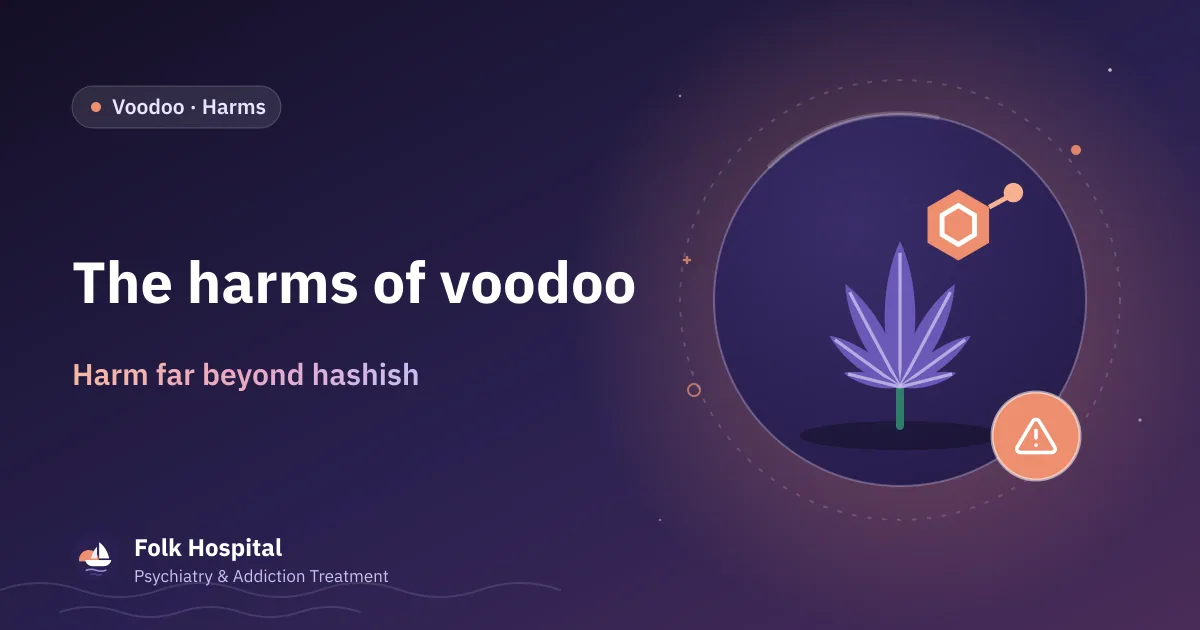
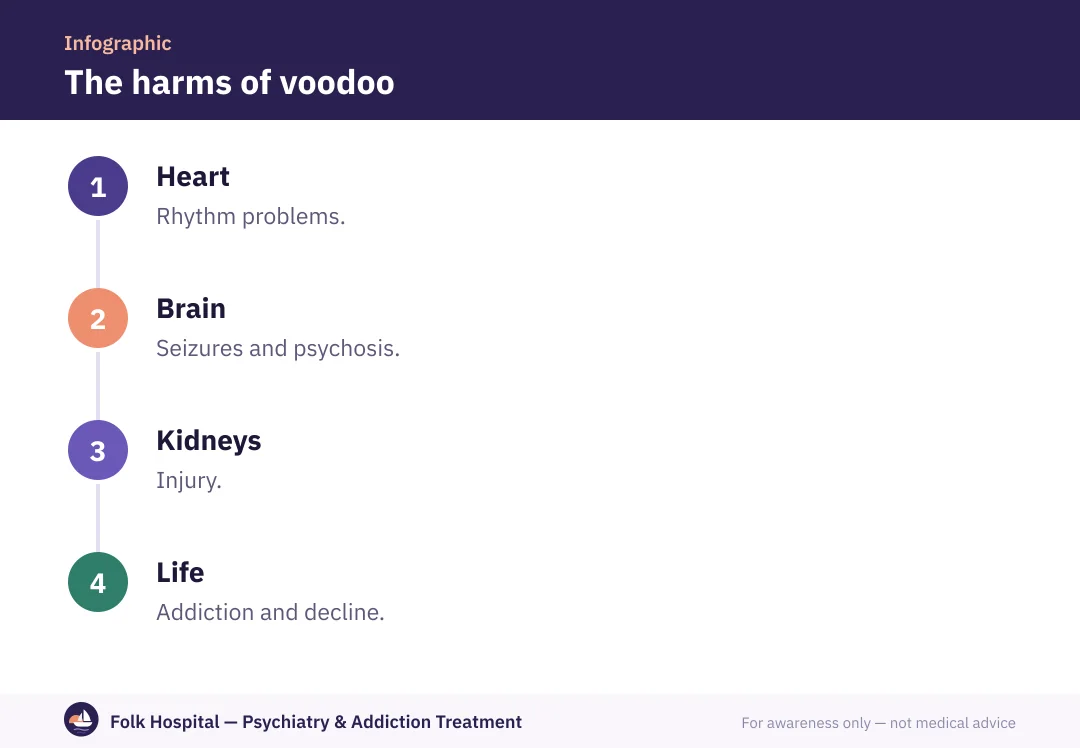
| Nervous system | Seizures, freezing and unconsciousness |
| Heart | Fast and irregular rhythm and chest pain |
| Kidneys | Acute kidney failure in some cases |
| Mind | Panic, psychosis, dangerous behaviour and depression |
| Dependence | Strong cravings, and withdrawal with insomnia and irritability |
Call an ambulance on 123 immediately for
- Seizures, unconsciousness, chest pain, or repeated vomiting with confusion.
What to do right nowAmbulance: 123
02Treatment
Addiction treatment and psychiatric and medical assessment. Read about Voodoo symptoms, how long it stays in the body and Strox addiction treatment.
؟Frequently asked questions
Is voodoo more dangerous than hashish?
Yes, by far, because it's stronger, its make-up is unknown, and it causes acute complications.
Why is Voodoo more dangerous than hashish?
Because synthetic substances are far stronger, bind tightly to brain receptors and have unknown contents.
Does it cause lasting harm?
It can damage the kidneys or heart, and psychological symptoms may persist in some people.
Does it show up in a test?
It doesn't show on standard strips and needs special tests.
Sources and references
- Synthetic Cannabinoids (K2/Spice) DrugFacts — National Institute on Drug Abuse (NIDA)
- Drugs, Brains, and Behavior: The Science of Addiction — National Institute on Drug Abuse (NIDA)

Written byDr. Mahmoud ElsawyConsultant in psychiatry and addiction treatment
A psychiatrist specialising in addiction and mental illness in adults and adolescents, with a focus on dual diagnosis.
For awareness only — not a substitute for medical advice. Editorial policy · View profile