01Signs
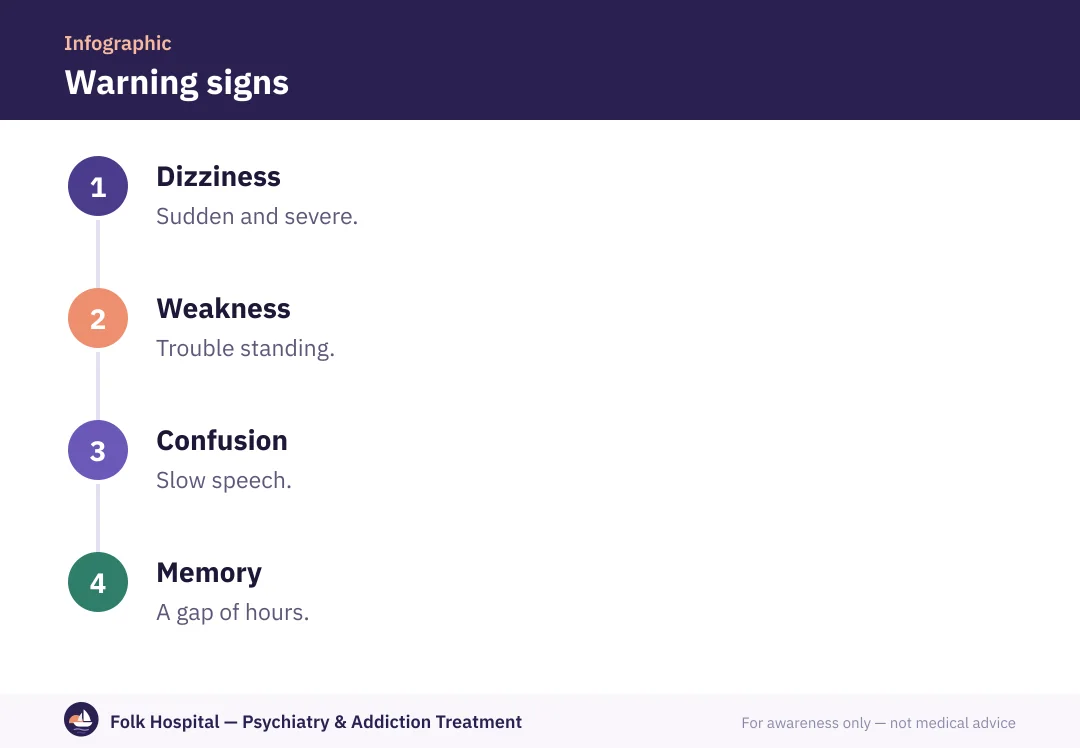
| Type | Signs |
|---|---|
| Under the effect | Severe drowsiness, dizziness, muscle relaxation, slurred speech and confusion |
| Memory | Memory loss for hours of what happened under the effect |
| With alcohol | Deep sleep, slow breathing, vomiting with unconsciousness |
| Signs of dependence | Regular use, increasing the dose, and anxiety and insomnia when it's missing |
02Danger signs
- Unresponsiveness or slow breathing.
- Vomiting with unconsciousness.
- Suspicion that a substance was slipped into a drink.
03What should you do?
Don't leave the person alone, watch their breathing and get help. Read about Rohypnol withdrawal, its treatment and its harms.
؟Frequently asked questions
How can I tell drunkenness from a spiked drink?
If symptoms are much stronger than expected for the amount drunk, or came after a single drink, that's cause for suspicion and medical help.
What are the signs that Rohypnol may have been slipped into a drink?
Sudden dizziness or severe drowsiness out of proportion to what you drank, difficulty moving, then memory loss of what happened.
What should I do if that happens?
Stay with someone you trust, go to the emergency department immediately, ask for early testing, and you can report it to the authorities.
Does Rohypnol cause addiction?
Yes, like other benzodiazepines, with repeated use.
Sources and references
- Prescription Medicines — research topic — National Institute on Drug Abuse (NIDA)
- Drugs, Brains, and Behavior: The Science of Addiction — National Institute on Drug Abuse (NIDA)

A psychiatrist specialising in addiction and mental illness in adults and adolescents, with a focus on dual diagnosis.
For awareness only — not a substitute for medical advice. Editorial policy · View profile