01Signs
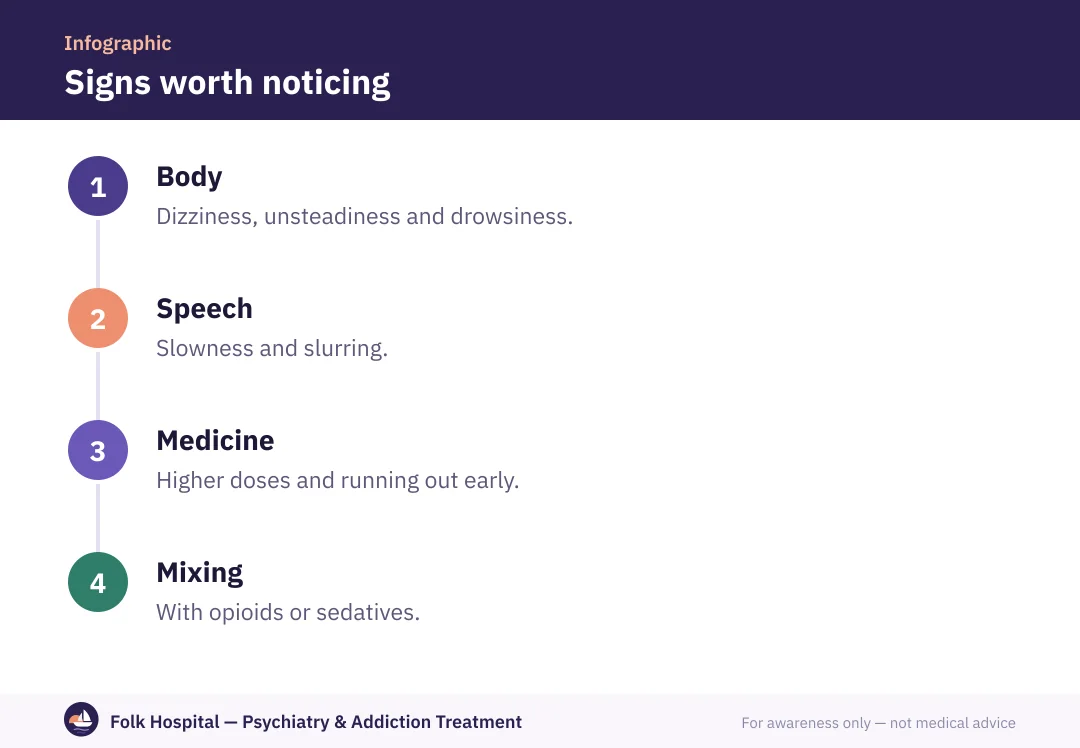
| Type | Signs |
|---|---|
| Under the effect | Drowsiness, dizziness, unsteadiness and stumbling, slurred speech, and confusion or a mild high |
| Mood | Mood swings and apathy |
| Signs of dependence | Increasing the dose, getting it without a prescription and running out early |
| When it's missing | Anxiety, insomnia, irritability, sweating and aches |
02Danger signs
Call an ambulance on 123 for
- Deep drowsiness or slow breathing, especially with opioids.
- Seizures after stopping suddenly.
- Severe confusion.
What to do right nowAmbulance: 123
03What should you do?
Don't stop the medicine suddenly, and suggest an assessment to set a safe reduction plan. Read about gabapentin withdrawal, its treatment and pregabalin.
؟Frequently asked questions
I take gabapentin on prescription and feel dizzy. Is that addiction?
Not necessarily; dizziness is a common side effect. Discuss adjusting the dose with your doctor, and don't change or stop it yourself.
Is gabapentin a drug of abuse?
It's a medicine for epilepsy and nerve pain, but it can be misused at high doses and cause dependence.
Why do some people mix it with opioids?
To strengthen the effect, but this mixture raises the risk of slowed breathing and overdose.
Does it show up in a drug test?
It doesn't show on standard strips and needs a specific test.
Sources and references
- Prescription Medicines — research topic — National Institute on Drug Abuse (NIDA)
- Drugs, Brains, and Behavior: The Science of Addiction — National Institute on Drug Abuse (NIDA)

Written byDr. Mahmoud ElsawyConsultant in psychiatry and addiction treatment
A psychiatrist specialising in addiction and mental illness in adults and adolescents, with a focus on dual diagnosis.
For awareness only — not a substitute for medical advice. Editorial policy · View profile