01Causes
| Cause | Picture |
|---|---|
| Anxiety and panic | Palpitations and fear |
| Trauma | Vigilance and nightmares |
| Stimulants | Acute rise |
| Opioid withdrawal | Sweating, anxiety and tremor |
When to get help immediately
- Suicidal thoughts or intent to harm yourself or others.
- Losing touch with reality or severe agitation.
What to do right now
In Egypt call the ambulance on 123 or the mental-health hotline 08008880700.
Ambulance: 123Read also: norepinephrine, Inderal, PTSD.
؟Frequently asked questions
What are signs of excess norepinephrine?
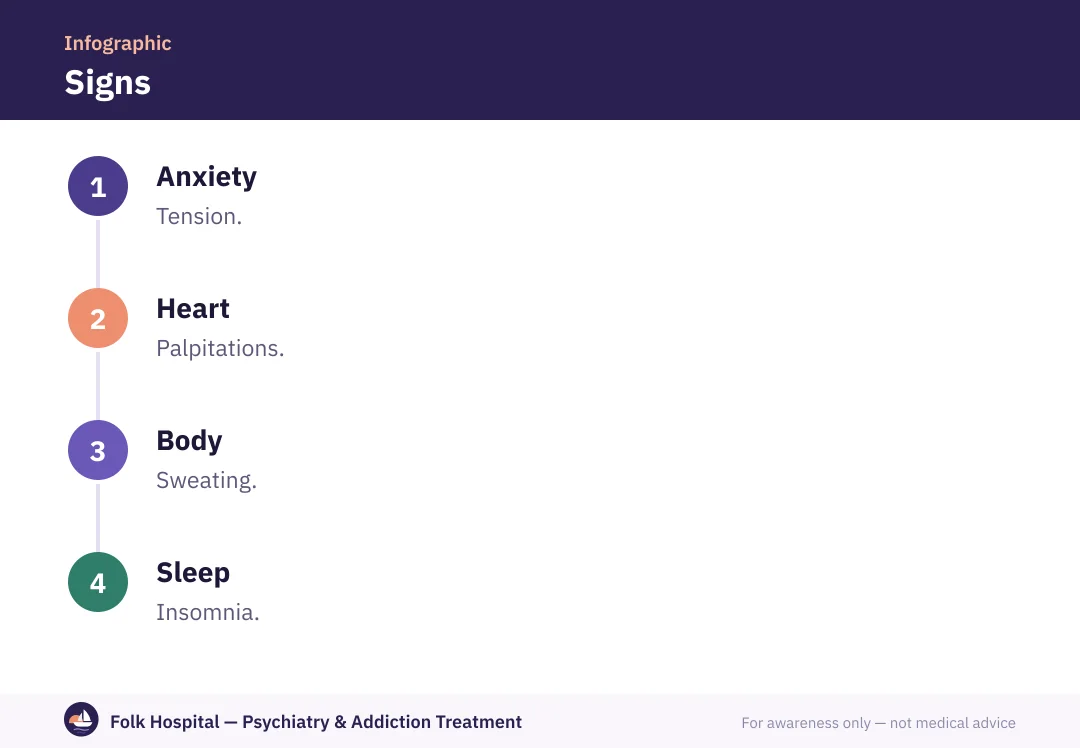
Palpitations, sweating, raised blood pressure, tension, insomnia and hypervigilance.
What causes it?
Anxiety, panic, trauma, stimulants, and opioid and alcohol withdrawal.
How is it linked to PTSD?
Hypervigilance and nightmares are linked to its high activity.
How does clonidine help?
It reduces its release, easing withdrawal symptoms.
How does propranolol help?
It blocks its effect on the heart, easing palpitations and tremor.
When is it dangerous?
With very high blood pressure, chest pain or confusion.
Sources and references
- Norepinephrine (Noradrenaline) — Cleveland Clinic
- Attention-Deficit/Hyperactivity Disorder — National Institute of Mental Health (NIMH)

Written byDr. Mahmoud ElsawyConsultant in psychiatry and addiction treatment
A psychiatrist specialising in addiction and mental illness in adults and adolescents, with a focus on dual diagnosis.
For awareness only — not a substitute for medical advice. Editorial policy · View profile