01Harms
| Area | Harms |
|---|---|
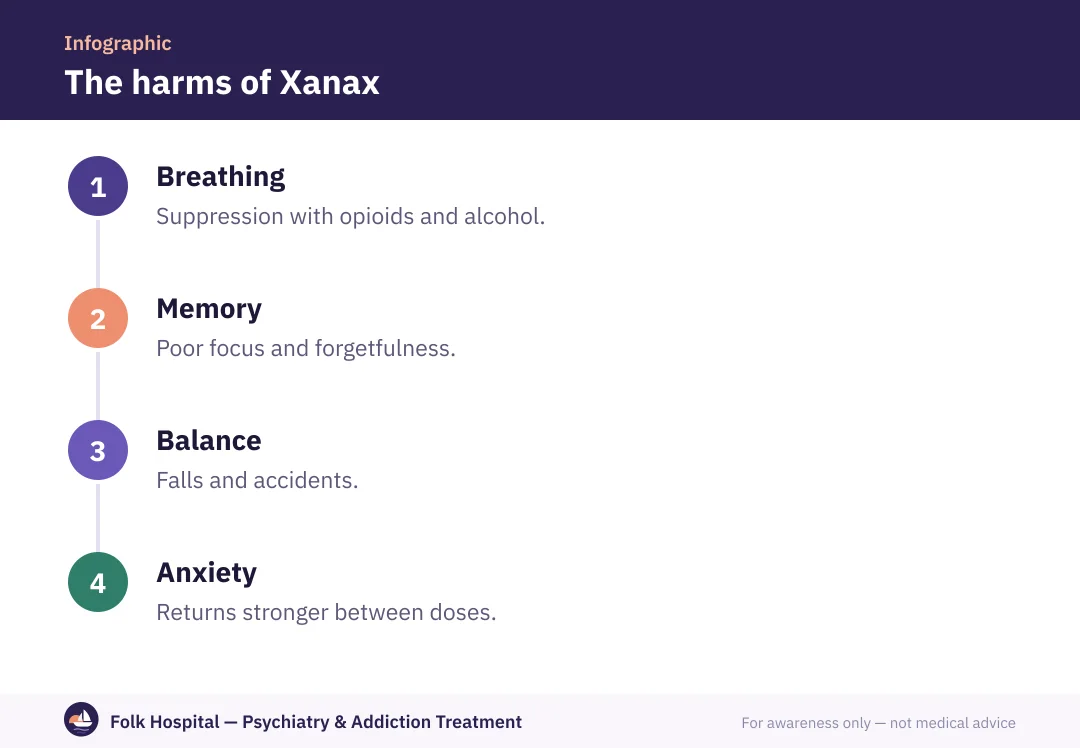
| Dependence | Rapid dependence and rebound anxiety between doses |
| Memory | Forgetfulness and memory loss for events |
| Behaviour | Impulsivity, and sometimes aggression with alcohol |
| Balance | Dizziness, falls and accidents |
| Breathing | Slowed with alcohol or opioids |
| Counterfeits | Fake pills that may contain stronger substances |
- Deep drowsiness or slow breathing, seizures after stopping, or severe symptoms after pills from an untrusted source.
02Treatment
Gradual reduction or switching to a longer-acting type, with anxiety treated by alternatives. Read about Xanax symptoms, its withdrawal and its treatment.
؟Frequently asked questions
Does Xanax damage memory permanently?
It weakens memory during use, and it usually improves after gradual stopping, though recovery can take weeks to months.
Does Xanax increase anxiety in the long run?
It can, because rebound anxiety between doses makes people rely on it more, which is why alternatives are preferred for chronic anxiety.
Does it cause strange behaviour?
It sometimes causes impulsivity, aggression or actions the person doesn't remember, especially with alcohol.
Is counterfeit Xanax common?
There are reports of fake pills containing strong substances, so it should only be taken from a pharmacy on prescription.
Sources and references
- Prescription Medicines — research topic — National Institute on Drug Abuse (NIDA)
- Drugs, Brains, and Behavior: The Science of Addiction — National Institute on Drug Abuse (NIDA)
- Fentanyl — research topic — National Institute on Drug Abuse (NIDA)

A psychiatrist specialising in addiction and mental illness in adults and adolescents, with a focus on dual diagnosis.
For awareness only — not a substitute for medical advice. Editorial policy · View profile