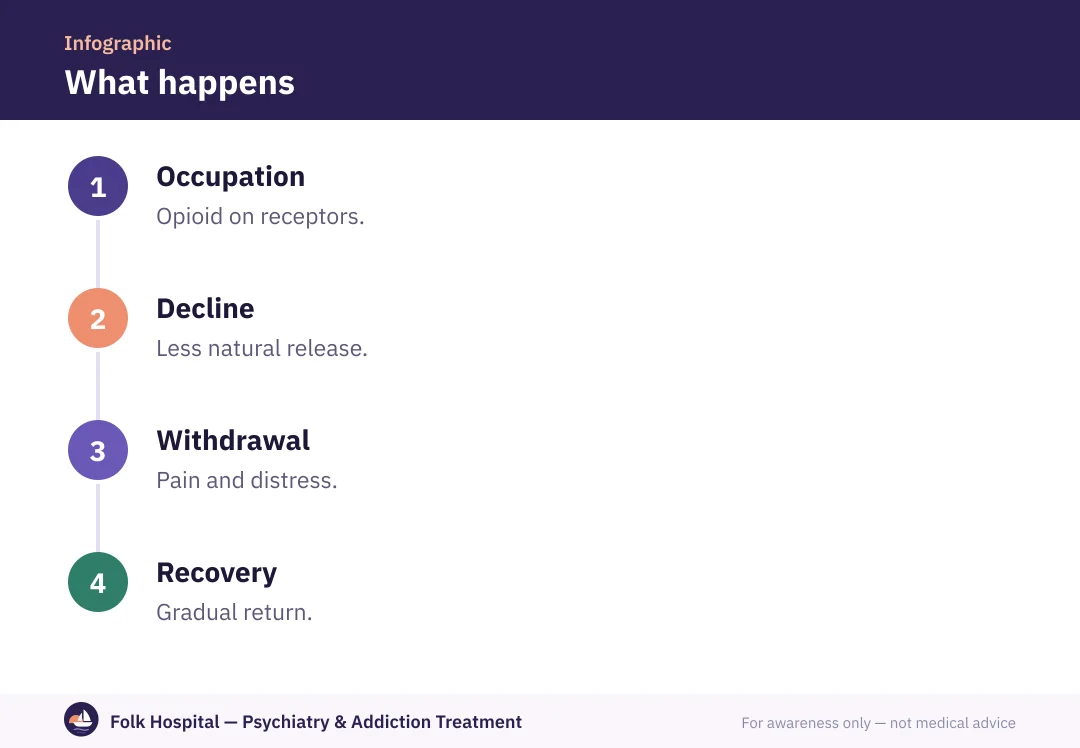
01What happens?
- Strong mimicryhigh and pain relief.
- Adaptationless natural production.
- Dependenceneeding the substance to avoid pain.
- Withdrawalaches and craving.
- Recoverygradual return to balance.
When to get help immediately
- Suicidal thoughts or intent to harm yourself or others.
- Losing touch with reality or severe agitation.
What to do right now
In Egypt call the ambulance on 123 or the mental-health hotline 08008880700.
Ambulance: 123Read also: endorphins, detox, heroin.
؟Frequently asked questions
Why are opioids addictive?
They mimic endorphins excessively, so the body adapts and depends on them.
Why do I hurt after quitting tramadol?
The endorphin system needs time to rebalance.
How long does withdrawal last?
Acute symptoms last days; some mild symptoms may last weeks.
Does exercise help?
Yes. It supports natural endorphins and mood in recovery.
What is the relapse danger after stopping?
Tolerance falls, so the old dose becomes an overdose risk.
Are there helpful medicines?
Yes, treatments for withdrawal and relapse prevention under specialist supervision.
Sources and references
- Endorphins — Cleveland Clinic
- Opioids — research topic — National Institute on Drug Abuse (NIDA)
- Medications to Treat Opioid Use Disorder — Research Report — National Institute on Drug Abuse (NIDA)

Written byDr. Mahmoud ElsawyConsultant in psychiatry and addiction treatment
A psychiatrist specialising in addiction and mental illness in adults and adolescents, with a focus on dual diagnosis.
For awareness only — not a substitute for medical advice. Editorial policy · View profile