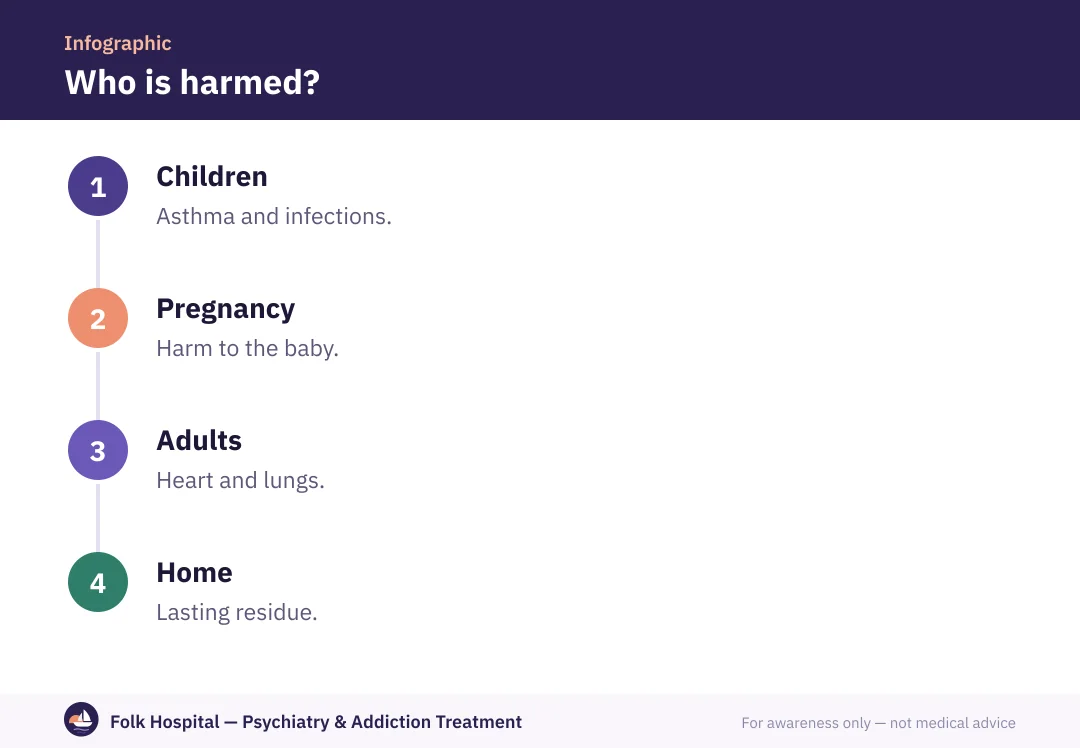
01Who is harmed?
| Group | Harm |
|---|---|
| Infants | Sudden death |
| Children | Asthma and infections |
| Pregnant women | Complications for the baby |
| Adults | Heart, lungs and cancer |
Inadequate protection
- An open window
- Another room
Real protection
- A smoke-free home
- A smoke-free car
Read also: smoking, harms of smoking, children's mental health.
؟Frequently asked questions
What is passive smoking?
Breathing in others' smoke from cigarettes or shisha.
Does opening a window protect?
Not enough; smoke lingers and spreads in the home.
How does it harm children?
Asthma, chest and ear infections and higher sudden infant death risk.
Does it harm pregnant women?
Yes. It raises risks to the baby.
What is third-hand smoke?
Toxic residues on clothes and furniture that may harm children.
How do I protect my family?
A completely smoke-free home and car; quitting is best.
Sources and references
- Passive smoking — NHS (UK)
- Tobacco — fact sheet — World Health Organization

Written byDr. Mahmoud ElsawyConsultant in psychiatry and addiction treatment
A psychiatrist specialising in addiction and mental illness in adults and adolescents, with a focus on dual diagnosis.
For awareness only — not a substitute for medical advice. Editorial policy · View profile