01Signs
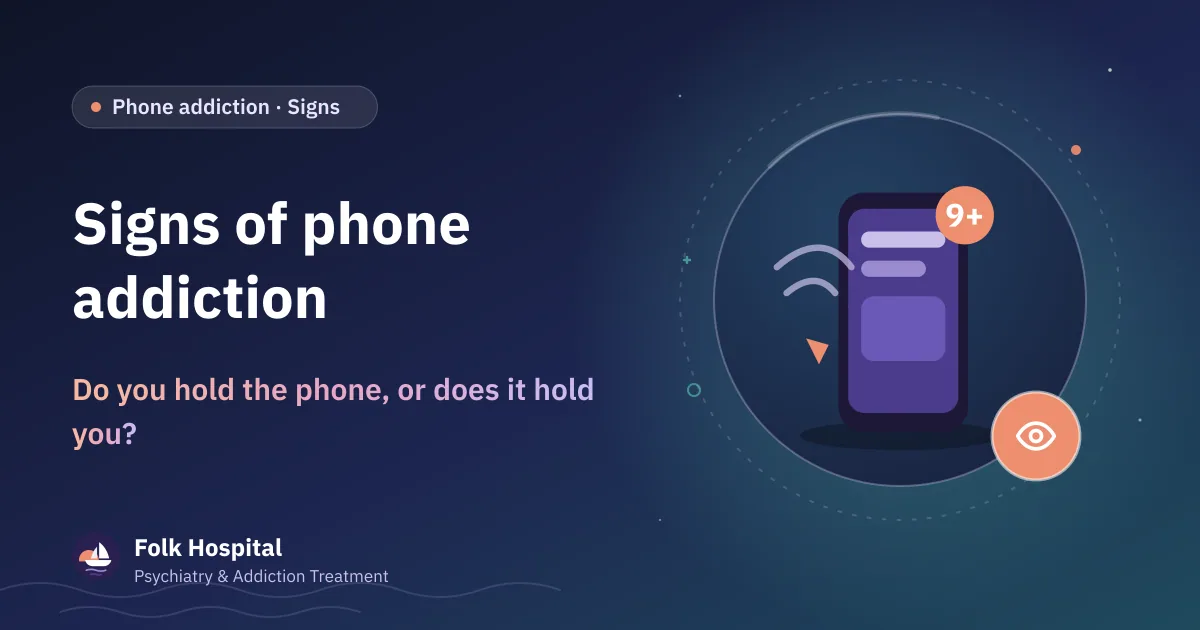
Signs
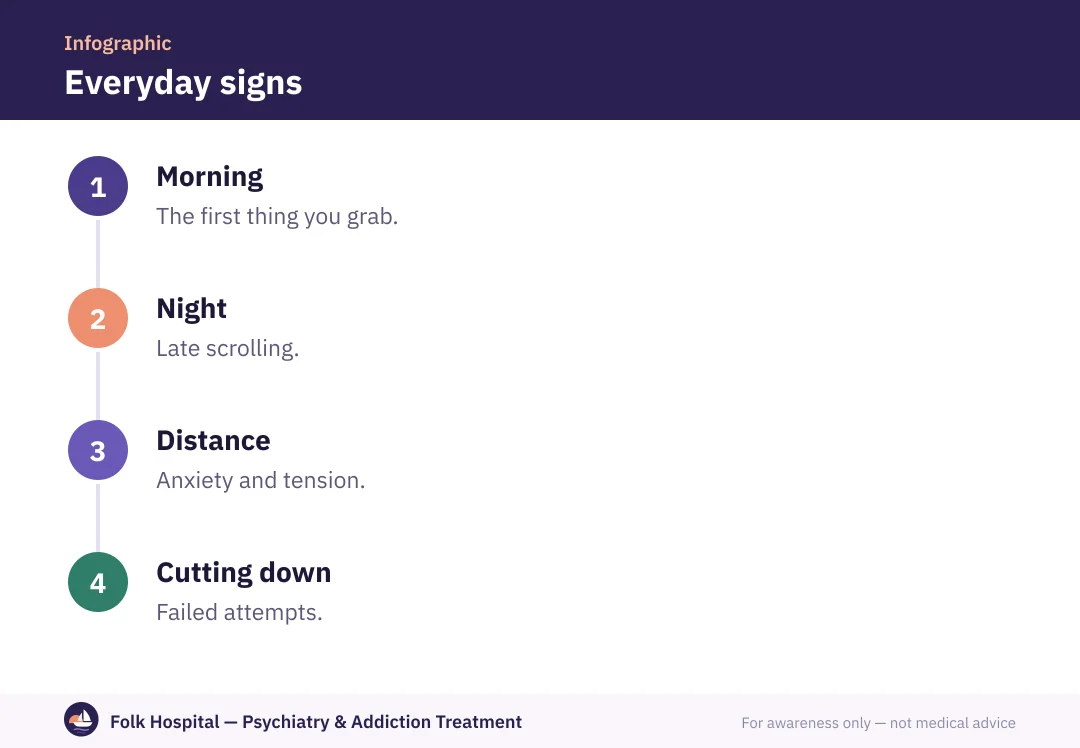
- Repeated checking without notifications.
- Phantom vibration.
- Anxiety when apart.
- More time than planned.
- Use while driving or eating.
- Late nights and poorer focus.
02What signs mean
| Sign | Meaning |
|---|---|
| Automatic checking | Compulsive habit |
| Anxiety when apart | Over-attachment |
| Late nights | Sleep disruption |
| Anger when interrupted | Loss of control |
Warning signs
- Use while driving
- Neglecting work
- Isolation
Reassuring signs
- Purposeful use
- Regular sleep
- Real relationships
Read also: phone addiction, phone addiction test, poor concentration.
؟Frequently asked questions
What are the signs of phone addiction?
Repeated checking, anxiety when apart, more time than planned, late nights and poorer concentration.
What is phantom vibration?
Feeling the phone vibrate when it isn't, linked to over-attachment.
How do I know my real usage?
From the phone's screen-time settings.
Is fear of forgetting the phone normal?
A little is normal; severe anxiety signals over-attachment.
Is phone use while driving a sign?
It's a sign and a danger to life.
When should I worry about my child?
With falling grades and sleep, withdrawal and anger when stopped.
Sources and references
- Addictive behaviours: gaming disorder — World Health Organization
- Social Media and Youth Mental Health — U.S. Surgeon General's Advisory — U.S. Surgeon General

Written byDr. Mohamed HosneyConsultant in mental health and behavioural rehabilitation
A specialist in psychological rehabilitation, behaviour modification and relapse prevention, with over 15 years in addiction programmes.
For awareness only — not a substitute for medical advice. Editorial policy · View profile